This Week in Politics – February 9–15, 2026 – Weekly Political News Recap
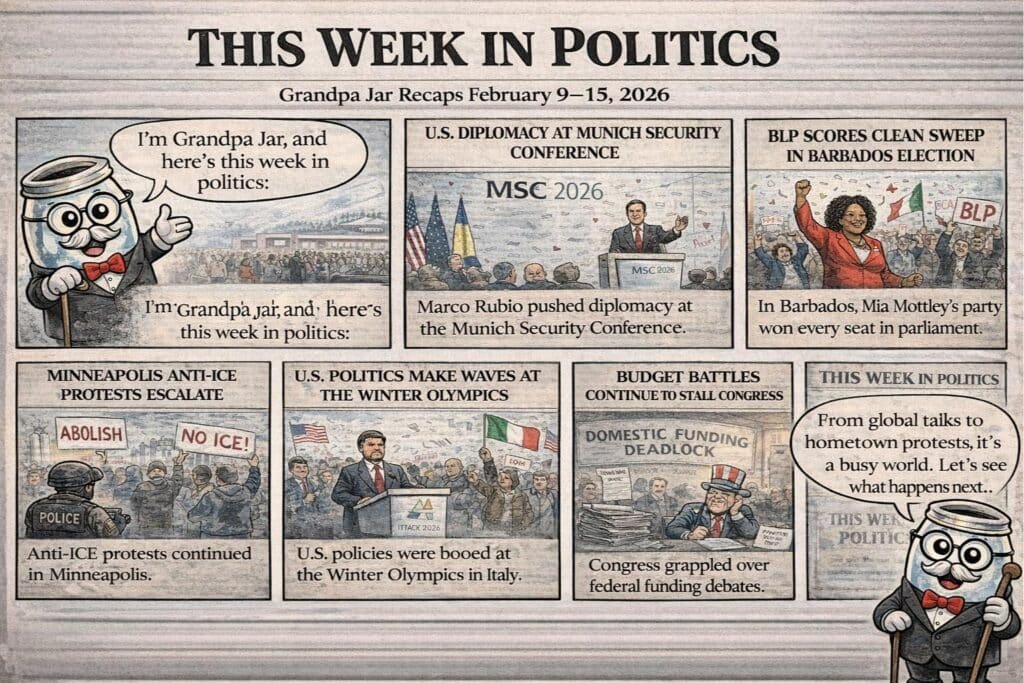
The week of February 9 through February 15, 2026 brought a mix of global diplomatic gatherings, democratic renewals in the Caribbean, and continued scrutiny of U.S. domestic policy on the world stage. From the high-profile Munich Security Conference in Germany to a historic election in Barbados, the politics of this week reflected enduring themes in governance: alliances tested by shifting interests, domestic policy examined abroad, and citizens engaging robustly with democratic institutions. Below is your Weekly Political News Recap for the week, with clear breakdowns of what happened and why it matters.
What Happened: U.S. Diplomacy Took Center Stage at the Munich Security Conference
Why It Matters
The 62nd Munich Security Conference brought world leaders, diplomats, and security experts to Germany to discuss global challenges including war, alliance coherence, and geopolitical realignment. The event, held from February 13 to 15, has long been a bellwether for the state of international relations. This year, debates were especially intense over transatlantic ties—particularly the relationship between the United States and the European Union.
U.S. Secretary of State Marco Rubio delivered a keynote address that sought to balance reassurance about U.S. commitment to historic alliances with a firm articulation of the current administration’s positions on migration, trade, and defense cooperation. Rubio acknowledged shared history with Europe while underlining differences in policy priorities and the need for Europe to bolster its own defense capabilities. European officials, including top EU policymaker Kaja Kallas, publicly rejected the notion that Europe faced “civilizational erasure.” They emphasized continued commitment to democratic values, press freedom, and human rights even while advocating stronger autonomous defense efforts.
This matters because the Munich Security Conference serves as one of the most visible forums where major powers negotiate the rules and expectations of global cooperation. The rhetoric and policy postures expressed there have real implications for NATO cohesion, Europe’s defense planning, and responses to enduring crises such as Russia’s war in Ukraine. The nuanced but pointed tensions revealed at the conference offer a snapshot of how world powers are recalibrating alliances in a competitive geopolitical era.
What Happened: Barbados Holds Historic General Election Sweep
Why It Matters
In the Caribbean, Barbados held its general election on February 11, resulting in a decisive victory for Prime Minister Mia Mottley and the Barbados Labour Party (BLP). For the third consecutive election, the BLP captured all 30 seats in the House of Assembly—a clean sweep that reinforces Mottley’s leadership and political mandate.
Mottley has been a prominent advocate for issues central to small island states, including climate adaptation, debt reform, and regional cooperation. Her victory underscores sustained trust among Barbadian voters in a leader who has elevated the nation’s voice on the global stage, particularly on climate resilience and economic reform. Caribbean regional bodies and international observers including the Commonwealth described the election as reflecting the will of the people.
Barbados’ election matters because it highlights the vibrancy of democratic processes in small nations and how those processes shape governance priorities that extend beyond national borders. Mottley’s renewed leadership is likely to influence negotiations on Caribbean economic integration, climate financing, and regional security cooperation. It also reinforces the importance of democratic continuity and stability in a region facing shared threats from climate change and economic pressures.
What Happened: Minneapolis Immigration Policy Dispute Continued to Capture Attention
Why It Matters
Domestic U.S. political tensions over immigration policy remained salient during this week, particularly as protests and legal developments continued in Minnesota. At least 50 people were arrested in Minneapolis while marking the one-month anniversary of the fatal shooting of Renee Good by immigration enforcement personnel. The anniversary demonstrations underscored ongoing debates about the legitimacy and oversight of federal immigration enforcement actions.
Additionally, high-profile criticism of immigration policy extended beyond protests. Barriers to data sharing between federal agencies and enforcement units were temporarily ordered by a federal judge in Massachusetts, raising questions about the legal bounds of enforcement and privacy rights. Meanwhile, workers at major technology firms organized petitions calling on their companies to disengage from contracts with immigration enforcement agencies—reflecting how private sector activism is beginning to influence political debates around domestic policy.
This matters because immigration enforcement has transformed from a border-centric issue to one that deeply affects everyday civic life in U.S. cities and states. The sustained protests, coupled with legislative and judicial responses, indicate that immigration policy is shaping voter sentiment and could influence campaign priorities as the U.S. prepares for midterm elections. The intersection of civil rights, public safety, and federal authority makes immigration enforcement a complex and consequential political concern that resonates across partisan lines.
What Happened: Winter Olympics Spotlighted U.S. Domestic Politics on International Stage
Why It Matters
The 2026 Winter Olympics in Italy continued to reflect political crosscurrents from around the world. International and U.S. athletes alike voiced criticism of U.S. immigration policy, particularly as Vice President JD Vance faced boos during event ceremonies. These moments illustrate how global sporting stages are increasingly being used to spotlight contentious domestic issues.
Additionally, Utah’s governor responded to international concerns about the U.S. political climate by emphasizing the country’s welcoming nature as the state begins preparations to host the 2034 Winter Olympics. This dual optics of protest and reassurance shows how the Olympics are serving as a mirror for broader political tensions.
This matters because it demonstrates the international visibility of domestic policy debates. The Olympics bring together global audiences, and when athletes use that platform for activism, it amplifies political discourse in ways that can affect national branding, diplomatic relationships, and public perceptions. The juxtaposition of athletic celebration and political critique highlights the multi-layered nature of contemporary global events.
What Happened: U.S. Federal Funding and Policy Debates Hovered in Congress
Why It Matters
While not always head-line grabbing, this week saw continued legislative deadlock in Congress over critical federal funding measures, including those related to the Department of Homeland Security and immigration enforcement. These budgetary negotiations are happening against the backdrop of increasing public pressure from protests and activist movements—pushing lawmakers toward potential shutdown brinkmanship or significant policy shifts.
Budget negotiations matter because they are the engine of governance: if lawmakers fail to resolve funding gaps, essential services and enforcement agencies risk disruption. The politics of budget negotiation often rationalizes broader debates about policy priorities, national security, public safety, and administrative accountability. As 2026 progresses, the outcomes of these discussions will shape policy environments and voter sentiment going into midterm elections.
What to Watch For Next
Here are the key developments to monitor in the coming weeks:
- Transatlantic Relations and Defense Policy: As European nations pursue more autonomous defense strategies, watch for further NATO and EU defense announcements.
- Barbados Government Actions: Follow how Prime Minister Mottley’s renewed mandate translates into policy initiatives on climate financing, economic reform, and regional cooperation.
- U.S. Immigration Policy Reform: Expect continued mobilization on immigration issues, including legislative efforts and judicial rulings that could frame 2026 midterm debates.
- Olympic Political Messaging: Continued athlete activism and international reactions to U.S. domestic policies may shape future global sporting diplomacy.
- Congressional Funding Deadlocks: Key budget negotiations, especially those affecting public safety and national security, could precipitate political standoffs.
References
Associated Press. (2026, February 12). Barbados’ prime minister clinches a third term in office after a clean sweep at the polls. AP News. https://www.apnews.com/article/1f18884f46dcbd8c9033860adb857135
Reuters. (2026, February 12). Barbadian PM Mia Mottley wins third term as BLP sweeps every seat in election. Reuters. https://www.reuters.com/world/americas/barbados-pm-mia-mottley-wins-third-election-with-clean-sweep-2026-02-12/
AP News. (2026, February 15). Europeans push back at US over claim they face ‘civilizational erasure’. AP News. https://www.apnews.com/article/0efc0b3d464f118e3e5d6748113c9271
Euronews. (2026, February 15). Munich Security Conference 2026: Highlights and analysis. Euronews. https://www.euronews.com/my-europe/2026/02/15/munich-security-conference-six-quotes-to-take-away-from-the-worlds-biggest-security-confer
Democracy Now. (2026, February 9). Headlines for February 09, 2026. Democracy Now. https://www.democracynow.org/2026/2/9/headlines
Place your business in Political Jars Political Business Directory
Follow Political Jar on Youtube, X (Twitter) and Facebook