
Bernie Sanders
Information
Contact Information
Social Media
About
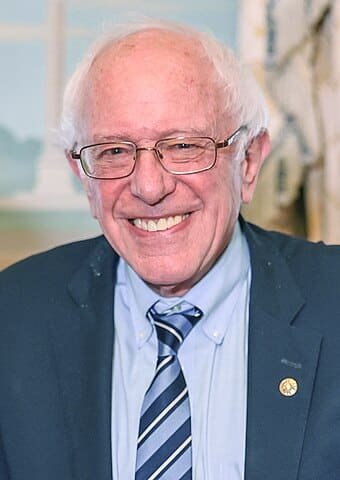
Bernie Sanders: United States Senator Representing Vermont
Few figures in modern American history have reshaped the political landscape as profoundly as Senator Bernard “Bernie” Sanders. Representing the small rural state of Vermont, Sanders has spent decades advocating for a progressive agenda that was once considered fringe but is now central to the national dialogue. As the longest-serving independent in congressional history, he has maintained a steadfast commitment to addressing economic inequality, healthcare access, and climate change.
In the 119th Congress, Sanders continues to serve as a powerful voice for working families. Although political shifts have altered his committee leadership roles, his influence remains undiminished. He currently serves as the Ranking Member of the Senate Committee on Health, Education, Labor, and Pensions (HELP). From this vantage point, he scrutinizes corporate labor practices and champions legislation to lower prescription drug costs. His career is a testament to the power of ideological consistency. Whether as a mayor, a congressman, or a two-time presidential candidate, Sanders has remained focused on a singular goal: creating a government that works for all, not just the wealthy few. This article explores the life, career, and enduring impact of Senator Bernie Sanders.
Early Life and Activist Roots
To understand Bernie Sanders’ political philosophy, one must look to his upbringing. He was born on September 8, 1941, in Brooklyn, New York. He grew up in a rent-controlled apartment in a working-class Jewish family. His father, Elias, was a Polish immigrant who worked as a paint salesman. His mother, Dorothy, dreamed of owning a private home but died young, never realizing that goal. These early experiences with financial insecurity deeply influenced Sanders. He learned early on that economic stability is fragile for many families.
Sanders attended James Madison High School in Brooklyn. He was a good student and an active athlete, captaining the track team. After high school, he spent a year at Brooklyn College before transferring to the University of Chicago. It was in Chicago that his political activism truly began. The university was a hotbed of intellectual debate, and Sanders immersed himself in the civil rights movement.
During his time as a student, he was a member of the Congress of Racial Equality (CORE) and the Student Nonviolent Coordinating Committee (SNCC). He helped organize sit-ins to protest segregated housing on campus. In 1963, he attended the March on Washington for Jobs and Freedom, where he heard Martin Luther King Jr. deliver his “I Have a Dream” speech. He graduated in 1964 with a degree in political science. However, his real education came from the streets and the meeting halls where he learned the mechanics of grassroots organizing.
The Road to Political Power
After college, Sanders moved to Vermont. He worked various jobs, including as a carpenter and a filmmaker. His entry into electoral politics was rocky. In the 1970s, he ran for governor and senator on the Liberty Union Party ticket. He lost every race, often garnering single-digit support. Yet, these campaigns helped him refine his message and build a small but loyal following.
His breakthrough came in 1981. Sanders ran for Mayor of Burlington, the largest city in Vermont. Running as an independent, he shocked the political establishment by defeating the six-term Democratic incumbent. The margin of victory was razor-thin—just 10 votes. As mayor, Sanders proved to be a pragmatist. He balanced budgets, revitalized the waterfront, and supported local arts. He called himself a “socialist,” but his governance was focused on efficient delivery of services.
Sanders served four terms as mayor. His success in Burlington propelled him to the national stage. In 1990, he was elected to the U.S. House of Representatives.22 He was the first independent elected to the House in 40 years. In Washington, he founded the Congressional Progressive Caucus. He earned a reputation as a “legislative amendment king” for his ability to pass amendments by building bipartisan coalitions, even while maintaining his ideological purity.
Ascent to the Senate
In 2006, Sanders ran for the United States Senate.24 He won decisively, defeating a wealthy Republican businessman. His victory marked a significant shift in Vermont politics and added a unique voice to the Senate. He caucuses with the Democratic Party, which allows him to maintain his seniority and committee assignments. However, he has always fiercely guarded his independence.
Sanders’ Senate career has been defined by his willingness to take lonely stands. He famously filibustered a tax-cut deal in 2010 for eight and a half hours. His speech, later published as The Speech, galvanized progressives across the country. He argued that the deal disproportionately benefited the wealthy while cutting growing deficits.
His national profile exploded during his 2016 presidential run. Initially dismissed by pundits, Sanders mounted a formidable challenge to Hillary Clinton. He won 23 primaries and caucuses. His message of “democratic socialism” resonated with younger voters and the working class. He ran again in 2020, enjoying early success before Joe Biden secured the nomination. These campaigns did not lead to the White House, but they fundamentally shifted the Democratic Party’s platform to the left.
Legislative Priorities: The Sanders Agenda
Senator Sanders focuses on structural changes to the American economy and society. His legislative portfolio is vast, but it centers on a few core pillars.
Healthcare as a Human Right
Sanders is the primary architect of the “Medicare for All” legislation in the Senate. He argues that healthcare should be guaranteed to every American, regardless of income. He points to other industrialized nations that provide universal coverage at a lower cost per capita. While this comprehensive overhaul has yet to pass, his advocacy has pushed the conversation forward.
In the 119th Congress, he continues to focus on specific health crises. He introduced the Long COVID Research Moonshot Act. This bill proposes $1 billion in annual mandatory funding for ten years. The goal is to accelerate research into the debilitating long-term effects of COVID-19. He views this as a public health emergency that requires a coordinated federal response.
Additionally, he partnered with Senator Jeff Merkley to introduce the Health Care Workforce Expansion Act. This legislation addresses the critical shortage of doctors and nurses in rural areas. It proposes tuition-free education for medical and nursing students who commit to working in underserved communities.
Economic Justice and Labor Rights
Sanders has long railed against income inequality. He frequently cites the disparity between CEO pay and average worker wages. To address this, he champions the Thirty-Two Hour Workweek Act. Introduced in March 2024, this bill seeks to reduce the standard workweek from 40 to 32 hours over four years. Crucially, it mandates that workers suffer no loss in pay. Sanders argues that advancements in artificial intelligence and automation have boosted productivity. He believes workers should share in these gains through increased leisure time, rather than just generating more profit for corporations.
He is also a staunch defender of unions. He regularly uses his committee hearings to call corporate executives to testify about labor practices. He has publicly supported unionization efforts at major corporations like Starbucks and Amazon. He believes that strong unions are the only way to rebuild the American middle class.
Social Security and Seniors
Protecting and expanding Social Security is another non-negotiable for Sanders. He introduced the Social Security Expansion Act alongside colleagues in the House.47 This bill aims to extend the solvency of the Social Security trust fund by lifting the cap on income subject to payroll taxes. Currently, high earners stop paying into Social Security after hitting a certain income threshold. Sanders wants to scrap this cap. The bill also proposes increasing monthly benefits for seniors to keep up with inflation.
Leadership in the 119th Congress
The 2024 elections brought changes to the Senate’s balance of power. With Republicans regaining the majority, committee chairmanships shifted to GOP hands. Consequently, Sanders transitioned from Chairman to Ranking Member of the Senate Committee on Health, Education, Labor, and Pensions (HELP).
While no longer holding the gavel, the Ranking Member position is powerful. It allows Sanders to set the opposition agenda for the committee. He works to block efforts to repeal labor protections or cut healthcare funding. He also retains the ability to request investigations and minority hearings.
Sanders also serves on several other key committees:
Senate Committee on the Budget: He remains a senior member here.52 Previously the Chair, he now works with Ranking Member Jeff Merkley to oppose austerity measures.
Senate Committee on Environment and Public Works: This assignment allows him to advocate for aggressive climate action. He supports the Green New Deal and massive investments in renewable energy.
Senate Committee on Energy and Natural Resources: Here, he often acts as a counterweight to fossil fuel interests.
Senate Committee on Veterans’ Affairs: A longtime member, Sanders has a strong track record of working across the aisle to improve VA benefits.
Despite the partisan divide, Sanders has shown a capacity for bipartisan cooperation. He often partners with conservative senators on issues like privacy rights and withdrawing troops from unauthorized conflicts.
Final Summary
Senator Bernie Sanders stands as a unique figure in American governance. He is an idealist who has learned to operate within the pragmatic machinery of the Senate. His journey from a Brooklyn tenement to the upper echelons of political power is a story of persistence. He has spent over four decades championing the same core issues: universal healthcare, economic equity, and environmental protection.
In the 119th Congress, his role as Ranking Member of the HELP Committee positions him as the chief defender of the social safety net. His recent legislative pushes, such as the 32-hour workweek and the Long COVID moonshot, demonstrate that he is not resting on his laurels. He continues to propose bold solutions to complex problems. For his supporters, he remains a beacon of moral clarity. For his detractors, he is a formidable opponent who cannot be ignored. Regardless of one’s political leaning, Bernie Sanders’ impact on the policies and priorities of the United States is undeniable.
References
Ballotpedia. (n.d.). United States Senate Committee on the Budget. https://ballotpedia.org/United_States_Senate_Committee_on_the_Budget
Congress.gov. (2024). S.3947 – Thirty-Two Hour Workweek Act. Library of Congress. https://www.congress.gov/bill/118th-congress/senate-bill/3947
Congress.gov. (2024). S.4964 – Long COVID Research Moonshot Act. Library of Congress. https://www.congress.gov/bill/118th-congress/senate-bill/4964
Sanders, B. (n.d.). About Bernie. U.S. Senator Bernie Sanders. Retrieved November 29, 2025, from https://www.sanders.senate.gov/about-bernie/
Solve M.E. (2024, August 2). Long COVID Research Moonshot Act of 2024 Introduced. Solve M.E./CFS Initiative. https://solvecfs.org/long-covid-research-moonshot-act-of-2024-introduced/
U.S. Senate Committee on Health, Education, Labor, and Pensions. (2025). Committee Members. https://www.help.senate.gov/about/members
Map
Images and Video
Voting History
| Date | Vote | Bill | Result |
|---|---|---|---|
| May 20, 2026 | Nay | On the Nomination PN851-6: Evan Rikhye, of the Virgin Islands, to be Judge for the District Court of the Virgin Islands for a term of ten years | Nomination Confirmed |
| May 19, 2026 | Yea | On the Motion to Discharge S.J.Res. 185 | Motion to Discharge Agreed to |
| May 19, 2026 | Nay | Motion to Invoke Cloture: Evan Rikhye to be Judge for the District Court of the Virgin Islands: Evan Rikhye, of the Virgin Islands, to be Judge for the District Court of the Virgin Islands for a term of ten years | Cloture Motion Agreed to |
| May 19, 2026 | Nay | On the Nomination PN851-1: Sheria Akins Clarke, of South Carolina, to be United States District Judge for the District of South Carolina | Nomination Confirmed |
| May 19, 2026 | Nay | Motion to Invoke Cloture: Sheria Akins Clarke to be U.S. District Judge for the District of South Carolina: Sheria Akins Clarke, of South Carolina, to be United States District Judge for the District of South Carolina | Cloture Motion Agreed to |
| May 18, 2026 | Nay | On the Nomination PN726-1 and PN726-3 and PN726-7 and PN726-10 and PN726-13 and PN726-14 and PN730-41 and PN730-48 and PN730-67 and PN730-66 and PN730-22 and PN730-29 and PN730-31 and PN730-27 and PN726-8 and PN730-56 and PN730-25 and PN786-11 and PN730-52 and PN786-8 and PN806-3 and PN730-57 and PN730-58 and PN730-60 and PN730-8 and PN730-21 and PN730-40 and PN730-43 and PN730-50 and PN730-62 and PN806-6 and PN730-12 and PN786-4 and PN730-3 and PN730-28 and PN730-37 and PN730-51 and PN730-54 and PN786-7 and PN730-68 and PN730-9 and PN730-5 and PN806-4 and PN730-44 and PN730-26 and PN730-61 and PN852-7 and PN730-1 and PN806-1: Catherine Dillon, of Maryland, to be an Assistant Secretary of State (Educational and Cultural Affairs) | Nomination Confirmed |
| May 14, 2026 | Nay | Motion to Invoke Cloture: En Bloc Nominations Provided for under the provisions of S. Res. 690: Catherine Dillon, of Maryland, to be an Assistant Secretary of State (Educational and Cultural Affairs) | Cloture Motion Agreed to |
| May 13, 2026 | Yea | Motion to Proceed on S.J.Res. 130: A joint resolution providing for congressional disapproval under chapter 8 of title 5, United States Code, of the rule submitted by the Bureau of Consumer Financial Protection relating to withdrawal of the rule relating to “Consumer Financi | Motion to Proceed Rejected |
| May 13, 2026 | Yea | Motion to Proceed on S.J.Res. 141: A joint resolution providing for congressional disapproval under chapter 8 of title 5, United States Code, of the rule submitted by Bureau of Consumer Financial Protection relating to the withdrawal of the rule relating to “Debt Collection | Motion to Proceed Rejected |
| May 13, 2026 | Yea | Motion to Proceed on S.J.Res. 132: A joint resolution providing for congressional disapproval under chapter 8 of title 5, United States Code, of the rule submitted by the Bureau of Consumer Financial Protection relating to the withdrawal of the rule relating to “Examinations | Motion to Proceed Rejected |
| May 13, 2026 | Nay | On the Nomination PN855-1: Kevin Warsh, of Florida, to be Chairman of the Board of Governors of the Federal Reserve System for a term of four years | Nomination Confirmed |
| May 13, 2026 | Yea | Motion to Invoke Cloture on the Motion to Proceed to S. Res. 526 | Cloture on the Motion to Proceed Agreed to |
| May 13, 2026 | Yea | On the Motion to Discharge S.J.Res. 163 | Motion to Discharge Rejected |
| May 12, 2026 | Nay | Motion to Invoke Cloture: Kevin Warsh to be Chairman of the Board of Governors, Federal Reserve System: Kevin Warsh, of Florida, to be Chairman of the Board of Governors of the Federal Reserve System for a term of four years | Cloture Motion Agreed to |
| May 12, 2026 | Nay | On the Nomination PN855-2: Kevin Warsh, of Florida, to be a Member of the Board of Governors of the Federal Reserve System for a term of fourteen years from February 1, 2026 | Nomination Confirmed |
| May 11, 2026 | Nay | Motion to Invoke Cloture: Kevin Warsh to be a Member of the Board of Governors of the Federal Reserve System: Kevin Warsh, of Florida, to be a Member of the Board of Governors of the Federal Reserve System for a term of fourteen years from February 1, 2026 | Cloture Motion Agreed to |
| May 11, 2026 | Nay | S.Res. 690: An executive resolution authorizing the en bloc consideration in Executive Session of certain nominations on the Executive Calendar. | Resolution Agreed to |
| Apr 30, 2026 | Yea | On the Motion to Discharge S.J.Res. 184 | Motion to Discharge Rejected |
| Apr 30, 2026 | Nay | Motion to Invoke Cloture: S. Res. 690 | Cloture Motion Agreed to |
| Apr 29, 2026 | Yea | Motion to Proceed on S.J.Res. 99: A joint resolution providing for congressional disapproval under chapter 8 of title 5, United States Code, of the rule submitted by U.S. Citizenship and Immigration Services relating to “Removal of the Automatic Extension of Employment Autho | Motion to Proceed Rejected |
| Apr 29, 2026 | Yea | Motion to Proceed on S.J.Res. 139: A joint resolution providing for congressional disapproval under chapter 8 of title 5, United States Code, of the rule submitted by the Environmental Protection Agency relating to “Air Plan Disapproval; Colorado; Regional Haze Plan for the | Motion to Proceed Rejected |
| Apr 29, 2026 | Nay | On the Nomination PN730-14: Robert Cekada, of Florida, to be Director, Bureau of Alcohol, Tobacco, Firearms, and Explosives | Nomination Confirmed |
| Apr 28, 2026 | Nay | On the Point of Order S.J.Res. 124 | Point of Order Well Taken |
| Apr 28, 2026 | Nay | Motion to Proceed on S.Res. 690: An executive resolution authorizing the en bloc consideration in Executive Session of certain nominations on the Executive Calendar. | Motion to Proceed Agreed to |
| Apr 27, 2026 | Nay | Motion to Invoke Cloture: Robert Cekada to be Director, Bureau of Alcohol, Tobacco, Firearms, and Explosives: Robert Cekada, of Florida, to be Director, Bureau of Alcohol, Tobacco, Firearms, and Explosives | Cloture Motion Agreed to |
| Apr 23, 2026 | Nay | S.Con.Res. 33: A concurrent resolution setting forth the congressional budget for the United States Government for fiscal year 2026 and setting forth the appropriate budgetary levels for fiscal years 2027 through 2035. | Concurrent Resolution Agreed to |
| Apr 23, 2026 | Yea | S.Amdt. 5333 (Schiff) to S.Con.Res. 33: To establish a deficit-neutral reserve fund relating to requiring the obligation of amounts appropriated to the Federal Emergency Management Agency to carry out the public assistance and hazard mitigation programs. | Amendment Rejected |
| Apr 23, 2026 | Yea | S.Amdt. 5336 (Wyden) to S.Con.Res. 33: To establish a deficit-neutral reserve fund relating to requiring the Comptroller General of the United States to conduct a study related to economic consequences of private or confidential drug pricing agreements s | Amendment Rejected |
| Apr 23, 2026 | Yea | On the Motion (Motion to Waive All Applicable Budgetary Discipline Re: Padilla Amdt. No. 4855) | Motion Rejected |
| Apr 23, 2026 | Yea | On the Motion (Motion to Waive All Applicable Budgetary Discipline Re: Sanders Amdt. No. 5159) | Motion Rejected |
| Apr 23, 2026 | Yea | S.Amdt. 5235 (Merkley) to S.Con.Res. 33: To establish a deficit-neutral reserve fund relating to the impacts of hedge fund ownership of single-family homes and rent prices. | Amendment Rejected |
| Apr 23, 2026 | Nay | S.Amdt. 5378 (Paul) to S.Con.Res. 33: To reduce new budget authority for functions 150, 250, 500, and 600 in order to offset $70,000,000,000 of new spending by cutting $45,000,000,000 of foreign aid, eliminating $5,000,000,000 in refugee spending, cuttin | Amendment Rejected |
| Apr 23, 2026 | Yea | On the Motion (Motion to Waive All Applicable Budgetary Discipline Re: Markey Amdt. No. 5001) | Motion Rejected |
| Apr 23, 2026 | Nay | On the Motion (Motion to Waive All Applicable Budgetary Discipline Re: Hawley Amdt. No. 4794) | Motion Rejected |
| Apr 23, 2026 | Nay | On the Motion (Motion to Waive All Applicable Budgetary Discipline Re: Kennedy Amdt. No. 5414) | Motion Rejected |
| Apr 22, 2026 | Yea | On the Motion (Motion to Waive All Applicable Budgetary Discipline Re: Alsobrooks Amdt. No. 5294) | Motion Rejected |
| Apr 22, 2026 | Yea | On the Motion (Motion to Waive All Applicable Budgetary Discipline Re: Hickenlooper Amdt. No. 4956) | Motion Rejected |
| Apr 22, 2026 | Yea | On the Motion (Motion to Waive All Applicable Budgetary Discipline Re: Hirono Amdt. No. 4884) | Motion Rejected |
| Apr 22, 2026 | Yea | S.Amdt. 5281 (Graham) to S.Con.Res. 33: To establish a deficit-neutral reserve fund relating to the apprehension and deportation of adult illegal aliens convicted of rape, murder, or sexual abuse of a minor after illegally entering the United States. | Amendment Agreed to |
| Apr 22, 2026 | Yea | On the Motion (Motion to Waive All Applicable Budgetary Discipline Re: Ossoff Amdt. No. 4897) | Motion Rejected |
| Apr 22, 2026 | Yea | On the Motion (Motion to Waive All Applicable Budgetary Discipline Re: Lujan Amdt. No. 4798) | Motion Rejected |
| Apr 22, 2026 | Yea | On the Motion (Motion to Waive All Applicable Budgetary Discipline Re: Schumer Amdt. No. 4799) | Motion Rejected |
| Apr 22, 2026 | Yea | On the Motion to Discharge S.J.Res. 114 | Motion to Discharge Rejected |
| Apr 21, 2026 | Nay | Motion to Proceed on S.Con.Res. 33: A concurrent resolution setting forth the congressional budget for the United States Government for fiscal year 2026 and setting forth the appropriate budgetary levels for fiscal years 2027 through 2035. | Motion to Proceed Agreed to |
| Apr 20, 2026 | Nay | On the Nomination PN787-1: Andrew B. Davis, of Texas, to be United States District Judge for the Western District of Texas | Nomination Confirmed |
| Apr 16, 2026 | Nay | Motion to Invoke Cloture: Andrew B. Davis to be U.S. District Judge for the Western District of Texas: Andrew B. Davis, of Texas, to be United States District Judge for the Western District of Texas | Cloture Motion Agreed to |
| Apr 16, 2026 | Nay | H.J.Res. 140: Providing for congressional disapproval under chapter 8 of title 5, United States Code, of the rule submitted by the Bureau of Land Management relating to Public Land Order No. 7917 for Withdrawal of Federal Lands; Cook, Lake, and Saint Lou | Joint Resolution Passed |
| Apr 15, 2026 | Nay | Motion to Proceed on H.J.Res. 140: Providing for congressional disapproval under chapter 8 of title 5, United States Code, of the rule submitted by the Bureau of Land Management relating to Public Land Order No. 7917 for Withdrawal of Federal Lands; Cook, Lake, and Saint Lou | Motion to Proceed Agreed to |
| Apr 15, 2026 | Nay | On the Motion to Table H.J.Res. 140 | Motion to Table Agreed to |
| Apr 15, 2026 | Yea | On the Motion to Discharge S.J.Res. 138 | Motion to Discharge Rejected |