
PJ Eplains: The Electoral College
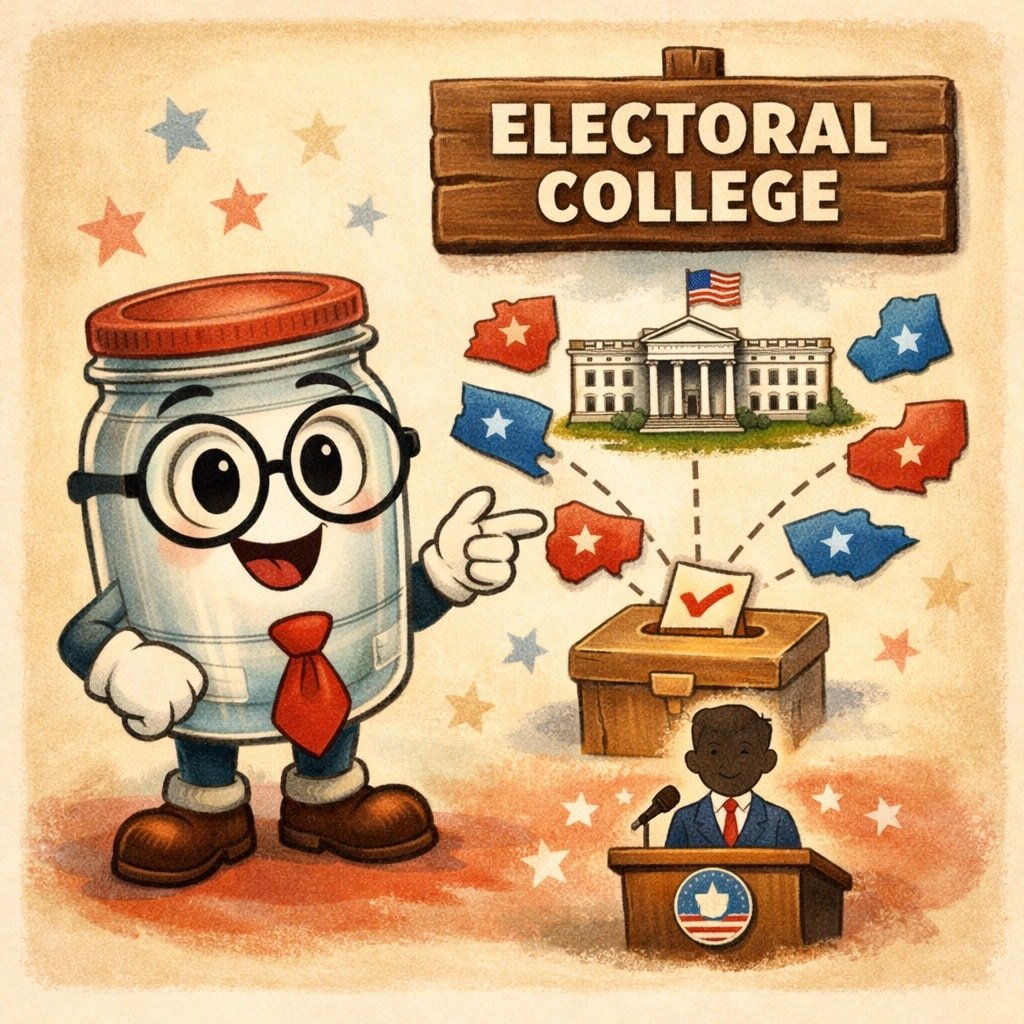
Hey kids! Welcome back to another fun lesson with PJ Explains Politics!
Today we’re talking about something that sounds super fancy but is actually a really important part of how we pick our president: the Electoral College.
Don’t worry—it’s not a real college with classes or homework. It’s a special way our country chooses the president every four years. Let’s break it down nice and easy, like we’re figuring out the rules to a big game!
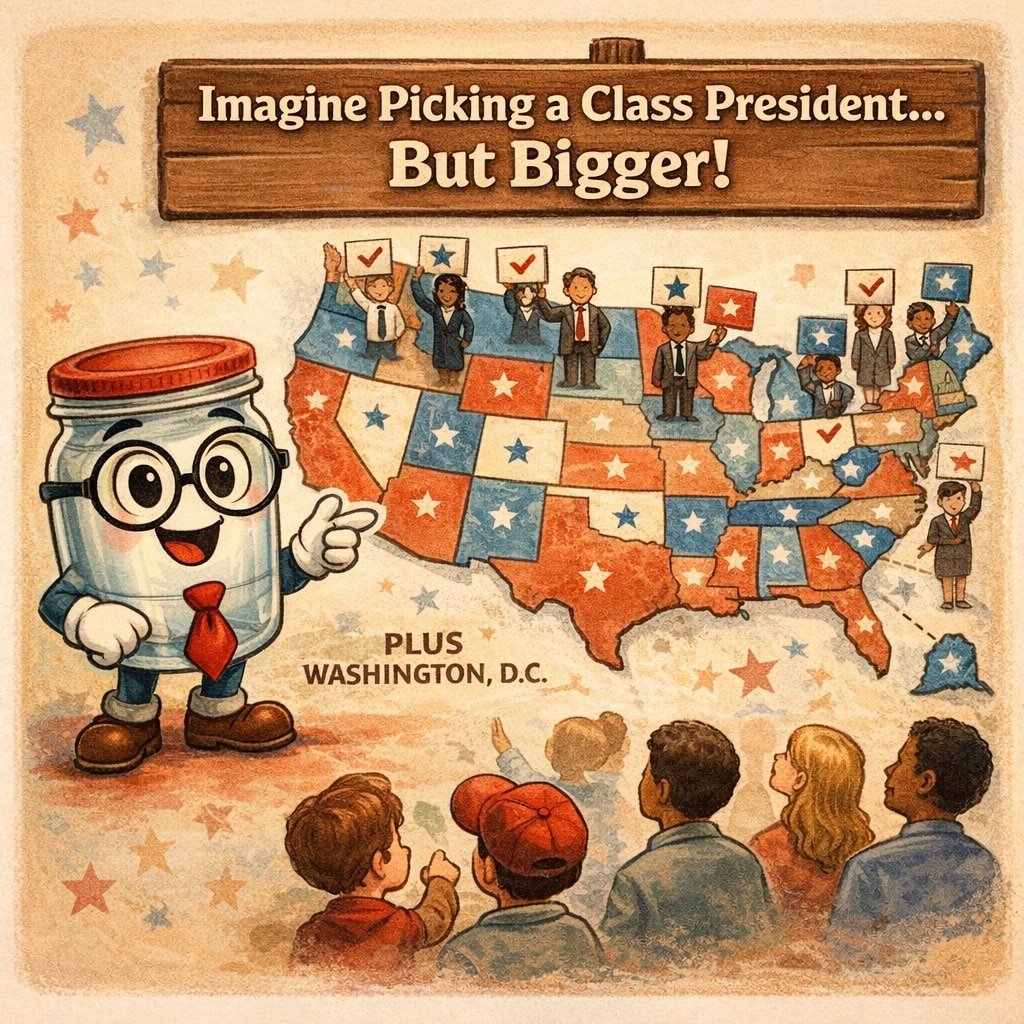
Imagine Picking a Class President… But Bigger!
You know how in school, when you vote for class president, the kid with the most votes wins? Simple, right?
Well, picking the president of the whole United States is a little different. Instead of one giant vote where the person with the most votes everywhere wins, we use a team system called the Electoral College.
Think of it like this: The country is made up of 50 states (plus Washington, D.C.). Each state gets its own team of “electors” — these are real people chosen to vote for president.
When you and your family vote on Election Day, you’re really helping decide which team’s electors get to vote for your state.
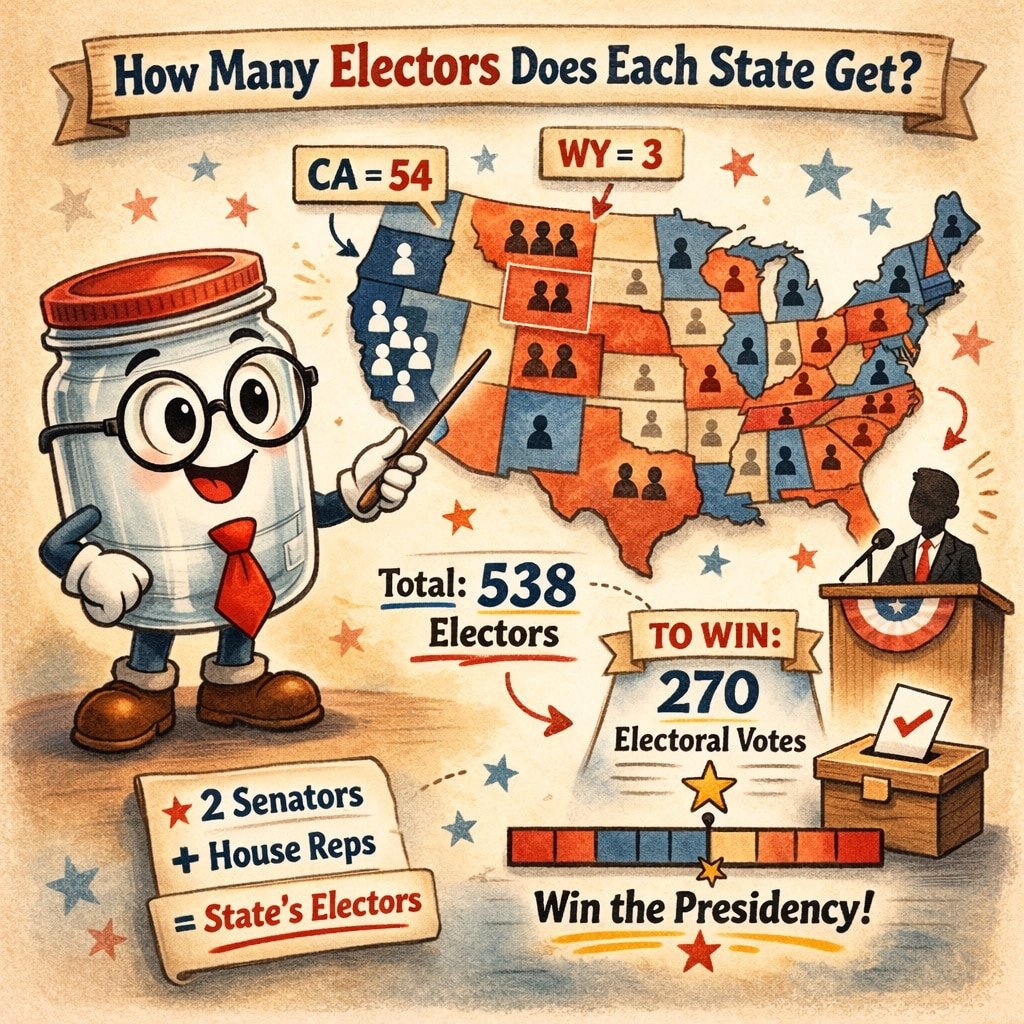
How Many Electors Does Each State Get?
Each state gets a number of electors based on how many people live there. It’s like giving bigger states more players on the team, but making sure smaller states still have a voice.
- Every state gets 2 electors automatically (because every state has 2 senators in Congress).
- Then, they get extra electors equal to how many representatives they have in the House (which depends on population).
Big state with Big Populations Get More
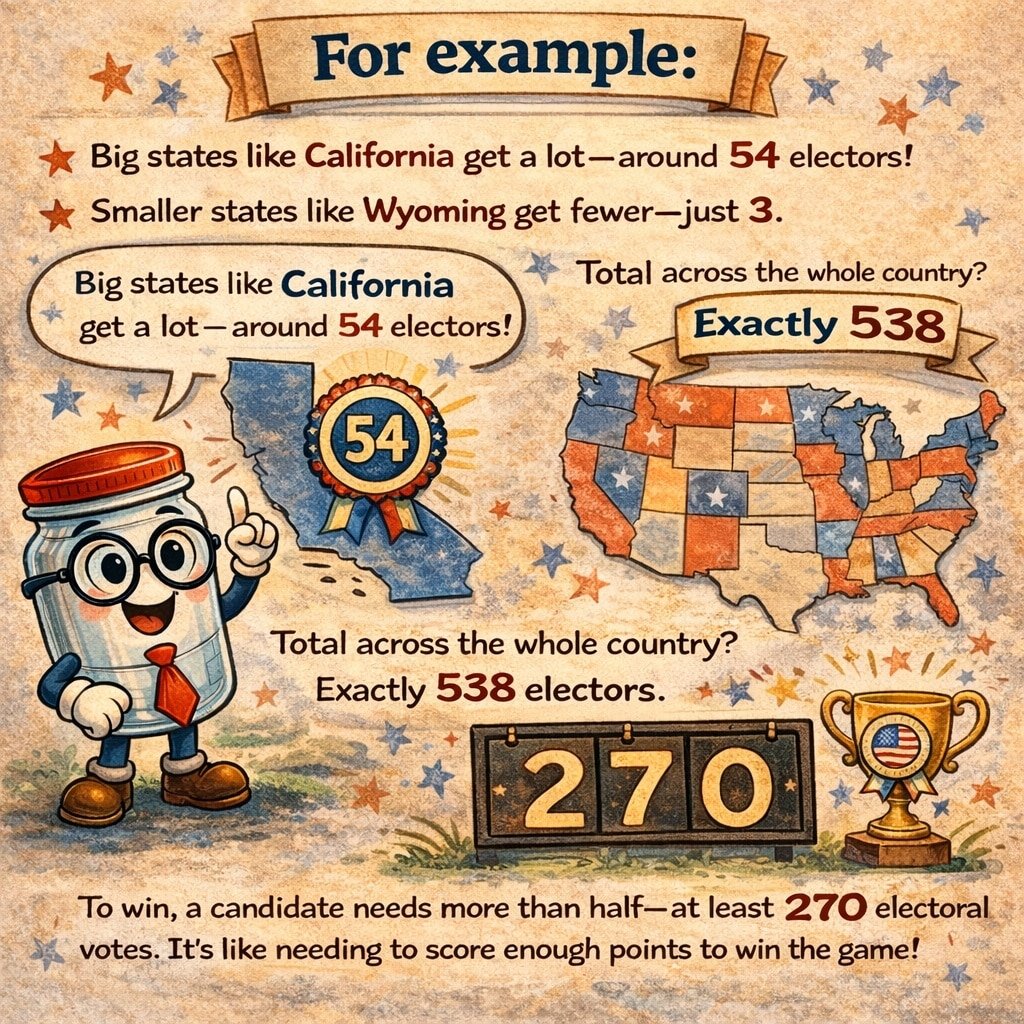
- Big states like California get a lot — around 54 electors!
- Smaller states like Wyoming. North Dakota, South Dakota and others get fewer electoral votes. They only receive 3.
- Total across the whole country? Exactly 538 electors.
To win, a candidate needs more than half — at least 270 electoral votes.
It’s like needing to score enough points to win the game!
How Does It Actually Work Step by Step?
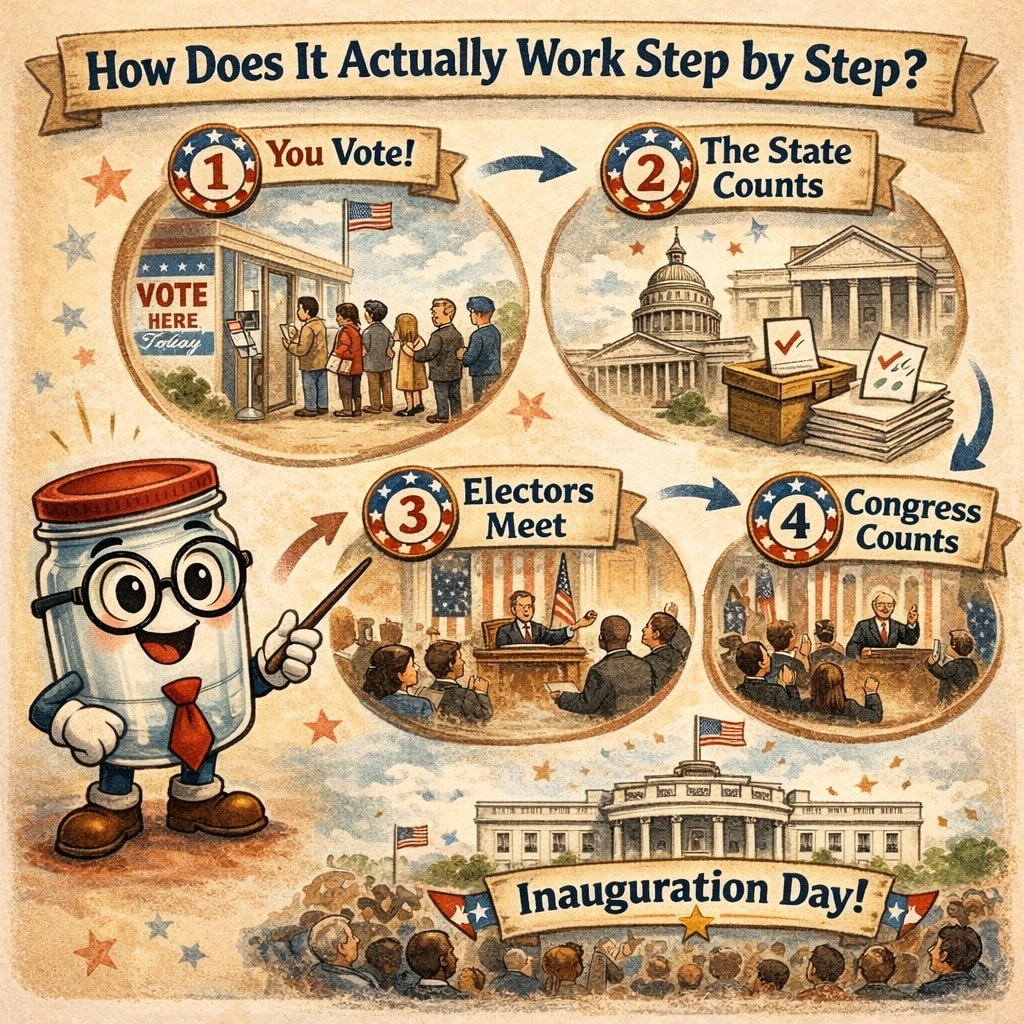
You vote! On Election Day in November, grown-ups (18 and older) go to the polls or mail in their ballot to vote for president and vice president.
The state counts the votes. In almost every state, the candidate who gets the most votes in that state wins all of that state’s electors. (It’s called “winner-takes-all.” Only Maine and Nebraska split theirs a little differently.)
The electors meet. In December, those winning electors gather (usually in their state’s capital) and cast their official votes for president and vice president.
Congress counts them. In January, everyone in Congress comes together to officially add up the electoral votes. The winner is announced!
Why Do We Have This System? (A Little History Fun Fact!)
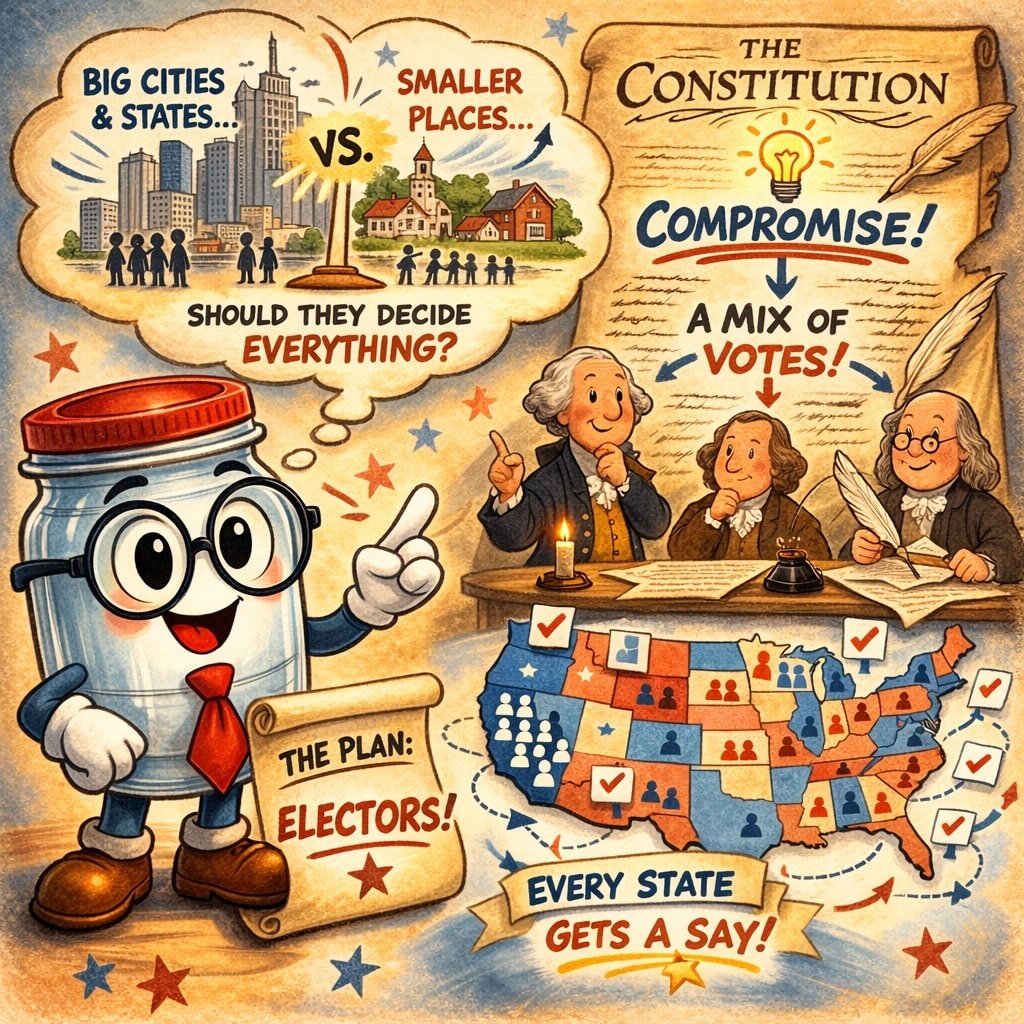
When our country was brand new, the people writing the Constitution (like George Washington and Benjamin Franklin) had a big debate.
They didn’t want Congress picking the president all by themselves, but they also worried that if it was just a straight popular vote, big cities or big states might always decide everything, and smaller places would feel left out.So they made a compromise — a mix!
Your vote matters a ton because it helps your state win its electors, and every state gets a fair say.
This way, presidents have to campaign and listen to people all over the country — not just in the biggest places.
Why Does It Matter to You?
Even though you’re too young to vote right now, understanding the Electoral College helps you see how our democracy is special.
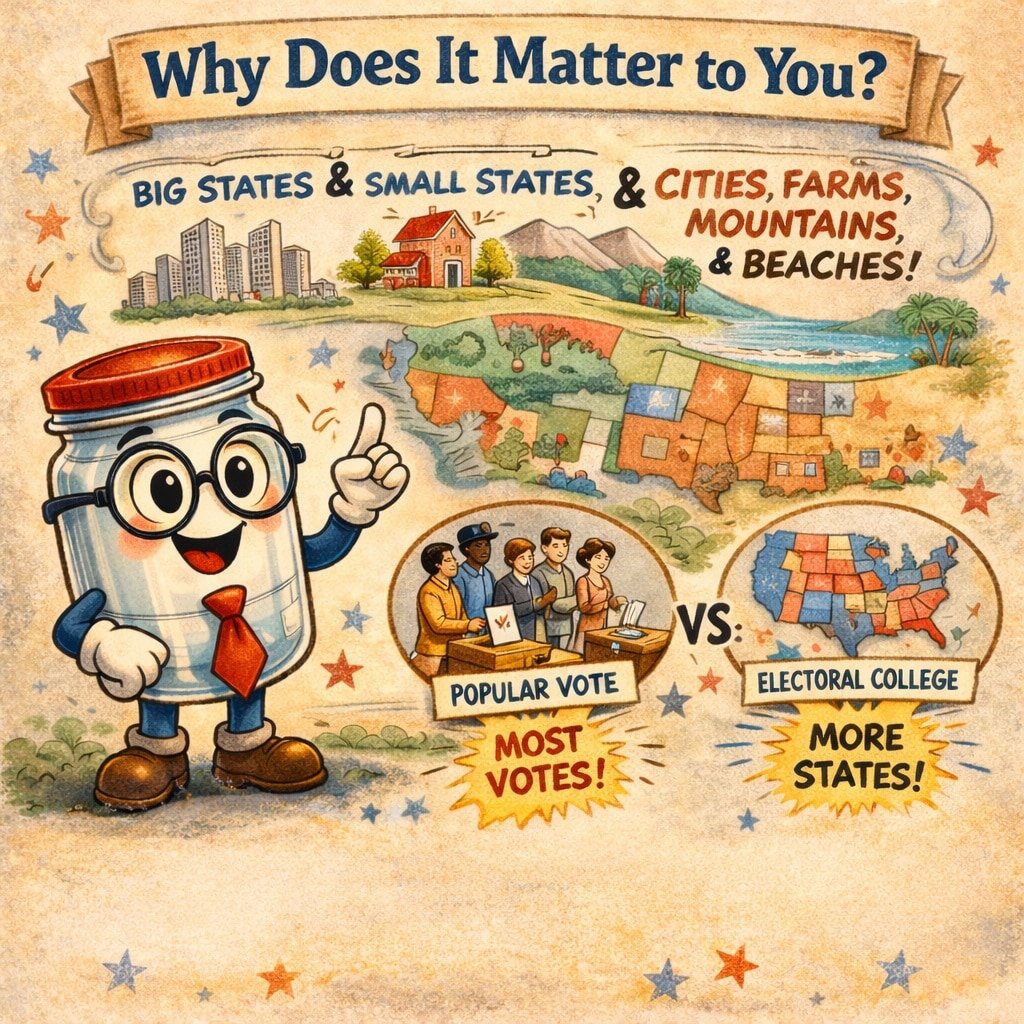
It makes sure the president represents the whole United States — big states, small states, cities, farms, mountains, and beaches!
Sometimes the candidate who gets the most total votes across the country (the “popular vote”) doesn’t win if they don’t win enough states.
That’s happened a few times in history (like in 2000 and 2016), and it sparks fun discussions about how our system works. But most of the time, the popular vote winner and the Electoral College winner are the same!
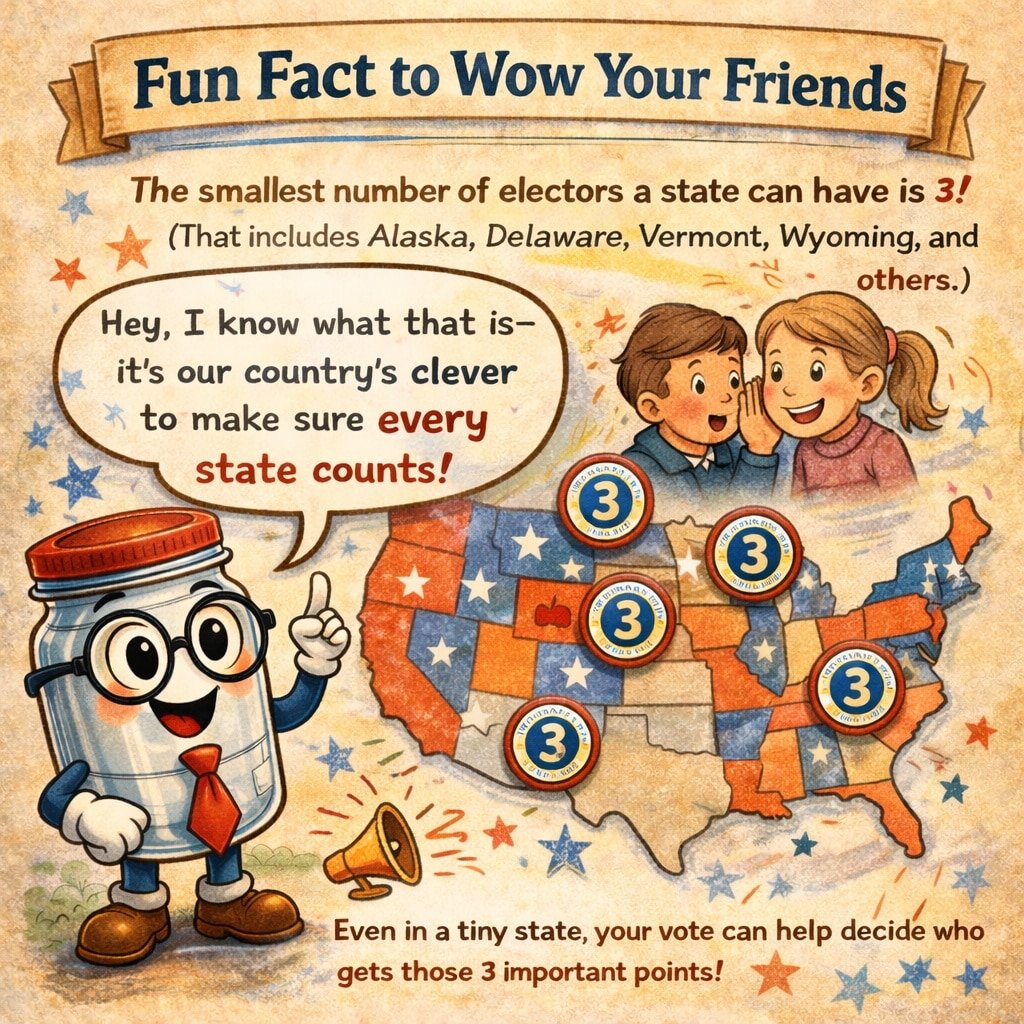
Fun Fact to Wow Your Friends
The smallest number of electors a state can have is 3 — and there are a few like that (Alaska, Delaware, Vermont, Wyoming, and others).
That means even in a tiny state, your vote can help decide who gets those 3 important points!
So next time you hear grown-ups talking about “Electoral College” on the news, you can say, “Hey, I know what that is — it’s our country’s clever way to make sure every state counts!”
What do you think — cool system or would you change it? Talk to your parents or teacher about it.
Learning how our country works makes you a super-smart future voter one day! See you next time for more PJ Explains Politics!

Learn more with PJ as PJ Explains Politics