

This Week in Politics – February 23–March 1, 2026 Weekly Political News Recap
The final week of February 2026 delivered seismic shifts in international geopolitics, renewed scrutiny of U.S. political figures, and continued debate over national security and domestic priorities. From a dramatic escalation in the Middle East highlighted by a joint U.S.–Israeli combat operation to high-profile congressional testimony from two former American leaders, the politics of this week rippled far beyond headlines.
Below is your Political News Recap from February 23 through March 1, 2026, with clear explanations of what happened and why these events matter in a broader political context.
Joint U.S.–Israeli Military Strikes on Iran and Confirmation of Supreme Leader’s Death
Why It Matters
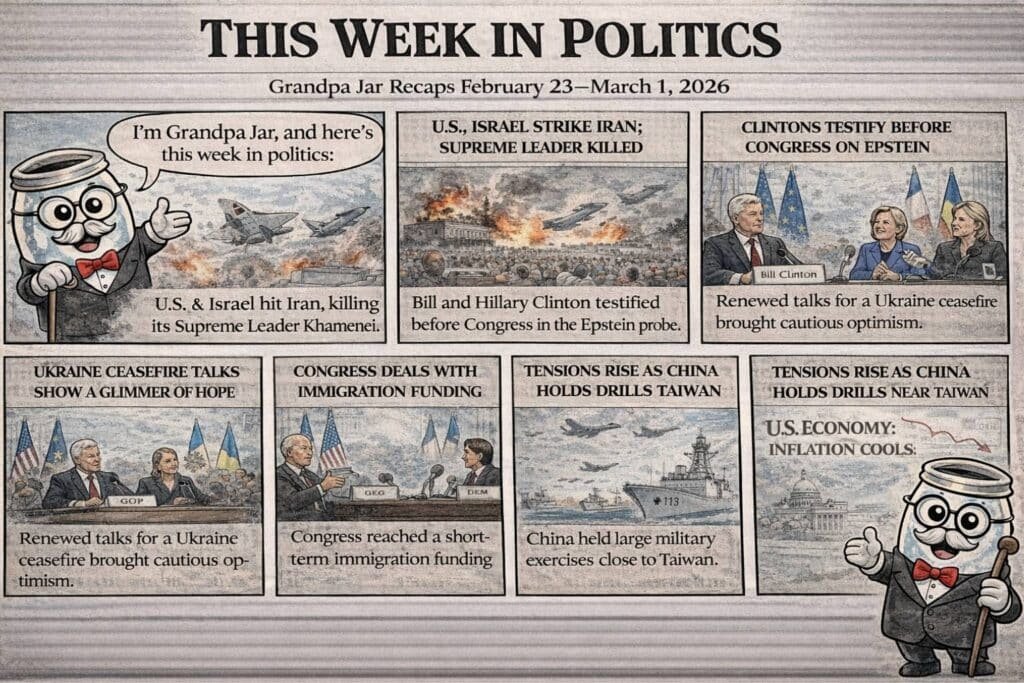
On February 28, 2026, the United States and Israel launched a major coordinated military operation against Iran’s leadership and strategic infrastructure in a dramatic escalation of Middle Eastern tensions. The offensive included precision air and missile strikes targeting key military sites, government facilities, and in particular the compound of Iran’s Supreme Leader, Ayatollah Ali Khamenei. U.S. officials confirmed that Khamenei was killed in the strikes, marking the end of a decades-long leadership that shaped Iran’s theocratic governance and its often adversarial posture toward the West.
Iran’s state media later confirmed the supreme leader’s death and announced days of official mourning. The joint strikes, described as part of a broader campaign aimed at dismantling elements of Iran’s military and nuclear infrastructure, triggered immediate retaliatory missile and drone attacks by Iran against U.S. and Israeli positions across the Middle East, including in Bahrain, Kuwait, and Israel itself. Civilian casualties were reported in multiple locations, and global markets were rattled by fears of escalation.
This moment is politically significant on multiple levels:
- Regional Power Balance: Khamenei’s death represents a major shift in the Middle East’s geopolitical landscape. For decades, he was the central figure in Iran’s regional strategy, including its relationships with proxy groups and its resistance to Western influence. His removal creates a leadership vacuum that could lead to internal power struggles or strategic recalibration.
- Global Security Risks: The strikes ignited immediate retaliation and have heightened fears of wider regional conflict involving neighboring states and global powers. Major international actors, including the United Nations and European governments, called for de-escalation even as hostilities continue.
- U.S. Policy and Domestic Politics: Domestically, the operation has reignited debate over executive military authority, congressional oversight of combat actions, and the long-term strategy toward Iran. The political divide over the legality and prudence of such strikes is likely to play a role in upcoming electoral campaigns and foreign policy debates.
The implications of this week’s events will take years to fully unfold, but in the immediate term, the world has entered a new phase of uncertainty about Middle Eastern stability and U.S. engagement abroad.
Bill and Hillary Clinton Testify Before Congress in Epstein Investigation
Why It Matters
In a rare and politically charged development, former President Bill Clinton and former Secretary of State Hillary Clinton testified before the U.S. House Oversight Committee this week as part of a congressional investigation related to convicted sex offender Jeffrey Epstein.
Hillary Clinton appeared before lawmakers on February 26 to answer questions about her past associations and knowledge regarding Epstein’s activities. During her testimony, she maintained that she had no specific information regarding Epstein’s criminal actions, emphasizing that she did not fly on his plane and had limited interactions with him. Congressional Republicans pressed her with questions about the extent of their historical connections and demanded accountability for influential figures associated with Epstein. The session was conducted behind closed doors, but media coverage of its occurrence underscored its political weight.
On February 27, Bill Clinton followed with his own deposition, similarly denying awareness of Epstein’s illegal conduct and reiterating that his interactions with Epstein were social and unrelated to criminal activity. Republican lawmakers pursued the testimony as part of a broader effort to understand the network of relationships around Epstein, while some Democratic lawmakers framed the proceedings as politically motivated.
This is politically important for several reasons:
- Historical Precedence: It is exceptionally rare for former presidents and secretaries of state to testify in person before Congress, especially on matters linked to controversial figures. The unusual nature of this event ensured intense media scrutiny and public interest.
- Political Polarization: The testimony became a focal point in the broader partisan landscape. Republicans framed the questioning as necessary oversight, while Democrats questioned whether the inquiry served a broader political agenda instead of a pursuit of truth.
- Executive Accountability Debate: The hearings intensified discussion around how former elected officials are held accountable for their actions—and how congressional investigations intersect with broader political narratives, especially in a high-stakes election year.
Whether this week’s testimony will lead to further legal or political consequences is uncertain, but the moment itself has already pushed accountability and oversight debates to the forefront of national discussion.
Renewed Focus on Ukraine Diplomacy and Potential Ceasefire Frameworks
Why It Matters
Diplomacy surrounding the war in Ukraine continued this week as officials from the United States, European partners, and Ukraine engaged in exploratory discussions on avenues for reducing hostilities. While these conversations did not produce an immediate ceasefire agreement, diplomats stressed the importance of exploring humanitarian corridors, prisoner exchanges, and localized de-escalation mechanisms.
These developments matter because the war remains a defining conflict of the decade, influencing global defense budgets, energy security, and alliance cohesion. Even incremental diplomatic engagement can provide relief for civilians caught in combat zones and create space for broader negotiations down the line.
Moreover, sustained dialogue—even without immediate breakthroughs—signals that no major stakeholder has yet abandoned the possibility of a negotiated transition. In a conflict that has now endured for more than three years, such signals matter to policymakers, markets, and voters worldwide.
Congress Passes Short-Term Homeland Security Funding Extension
Why It Matters
After weeks of negotiations, lawmakers in both parties in the U.S. Congress agreed to a short-term funding extension for the Department of Homeland Security (DHS), preventing an imminent funding lapse. The agreement preserves current spending levels for immigration enforcement and border security while also establishing a bipartisan oversight panel tasked with reviewing enforcement practices and use-of-force protocols.
This matters because immigration enforcement and DHS operations have become core battlegrounds in 2026 politics. Funding debates are not just about resource allocation—they are symbolic of broader disagreements about national security, civil liberties, and how the United States manages its borders and enforcement priorities.
The oversight panel is particularly noteworthy. It reflects recognition among some lawmakers that enforcement practices must be made more transparent and accountable, even as operational authority continues.
Avoiding a funding lapse also prevented potential disruptions in essential security operations—a politically smart move but one that also delays addressing the deeper policy disputes at play.
Inflation Data and U.S. Economic Trends Shape Political Rhetoric
Why It Matters
Economic data released this week showed signs of cooling inflation, even as prices remain above the Federal Reserve’s long-term target. Labor market indicators, including steady employment levels and continued wage gains, mitigated concerns of economic contraction.
Federal Reserve leaders emphasized a cautious approach to changing interest rate policy, reiterating their commitment to data-driven decision-making.
Economics matters more to voters than almost any other political issue. Inflation affects everyday life—especially on essentials like food, housing, and energy. Cooling inflation provides political cover to incumbents and lawmakers hoping to tout economic stability, even as disagreements persist about long-term affordability challenges. For activists and political operatives, these data points will feature prominently in messaging strategies as the 2026 midterm elections approach.
China Conducts Military Exercises Near Taiwan
Why It Matters
China announced and began expanded military exercises near Taiwan this week, described as defensive readiness drills involving naval and air assets near the Taiwan Strait. Taiwanese officials condemned the exercises as destabilizing, and U.S. officials reaffirmed commitments to regional security under existing policy frameworks.
Military activity near Taiwan matters because of the region’s strategic importance and potential to escalate into broader conflict. Even symbolic exercises can influence public sentiment, defense postures, and economic forecasts in East Asia and beyond. The United States and other regional partners must navigate a complex balance between deterrence and escalation avoidance.
What to Watch For
Here are the key developments to monitor in the coming weeks:
- Iran leadership transition and regional stability: With the death of Ayatollah Khamenei, watch for signs of internal power struggles, policy shifts, or diplomatic overtures emerging from Tehran.
- Congressional oversight outcomes: The bipartisan immigration oversight panel’s findings could shape enforcement policy and domestic political debate later in 2026.
- U.S. military authority debates: As combat operations continue, congressional and legal scrutiny of executive war powers may intensify.
- Federal Reserve and economic messaging: Future inflation and employment data will heavily influence political narratives ahead of midterm campaigns.
- China–Taiwan military posture: Continued exercise activity may affect regional alliances and global trade corridors.
References
Associated Press. (2026, February 26). Clinton testifies to House panel about connections to Epstein, denies wrongdoing.
Reuters. (2026, February 28). Iran’s Supreme Leader confirmed dead after U.S.–Israeli strikes; regional fallout intensifies.
AP News. (2026, March 1). Iran’s Supreme Leader Ali Khamenei killed in joint military operation, confirmed by state media.
Reuters. (2026, February 27). Congress agrees to short-term Homeland Security funding extension with oversight panel.
Associated Press. (2026, February 25). U.S. economic indicators show cooling inflation and steady labor market.
Reuters. (2026, February 28). China expands military exercises near Taiwan in defensive drills.
Follow Political Jar on X(Twitter), Facebook and YouTube
Find Government Information in the Political Jar Government Directory
