
PJ Explains Politics: How a Bill Becomes a Law
Hey there, young citizens! I’m PJ, short for Political Jar. I’m just a curious little jar who loves learning about how our country works – kinda like you!
Today, let’s team up for a super fun adventure: How a Bill Becomes a Law! Imagine a bill is like a tiny baby idea that wants to grow up and become a real law – you know, one of those official rules everyone has to follow.
It starts small and sad on the steps of the Capitol building (just like in that famous Schoolhouse Rock cartoon song you just watched above!), but with lots of help, it can become something big and important. Ready? Let’s go!

Step 1:
The Idea is Born! Someone gets a great idea: “Hey, we should have a law about cleaner parks!” or “Let’s make sure kids can read better in school!”
That idea gets written into a bill (a fancy word for “proposed law”).
A member of Congress – either a Representative (from the House) or a Senator (from the Senate) – says, “I like this idea!” and officially introduces it.
Poof! The bill gets a number like H.R. 123 or S. 456 and starts its big journey.
Most bills start in the House, especially if they involve money (the Constitution says so!).
Step 2:
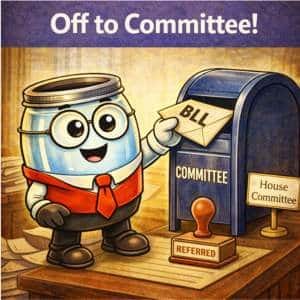
Off to Committee – The Tough Part!
The bill doesn’t go straight to a vote. First it gets sent to a committee – like a special club of Congress people who know all about that topic (like education, environment, or sports!).
They have hearings (experts come talk about why the idea is good or bad).
Then they mark it up – that means they argue, change words, add stuff, or take stuff away to make it better.
Finally, they vote: “Yay, let’s send this to the whole House/Senate!” or… “Nope, this one stays here.”
Guess what? Most bills never leave committee. They just quietly disappear. (Sad trombone sound!)
Step 3:
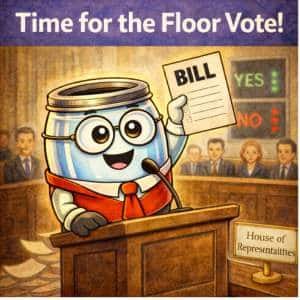
Time for the Big Floor Vote!
If the committee says yes, the bill goes to the full House or full Senate for debate.
In the House of Representatives (435 people): They set rules for how long to talk and what changes are allowed.
Then they vote – need more than half to say YES!
In the Senate (100 people): It’s more like a big discussion party. Anyone can talk as long as they want (that’s called a filibuster – sometimes they read phone books to stall!). To stop talking forever, 60 senators usually have to agree.
Then a simple majority vote wins.
If it passes one place… it goes to the other place to do the same thing all over!
Step 4:
What If They Don’t Agree?
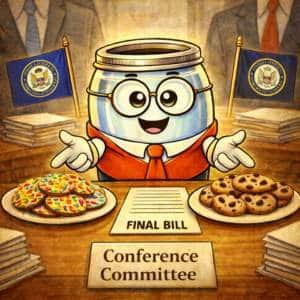
Sometimes the House version and Senate version are a little different (like one has sprinkles and the other has chocolate chips).
Then a special team from both sides meets in a conference committee to mix the best parts together into one final bill.
Both the House and Senate vote YES or NO on that final version – no more changes!
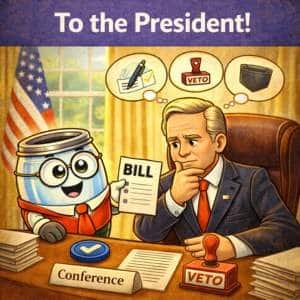
Step 5: To the President!
The final bill gets sent to the President of the United States and the President has a few choices:
Sign it → Yay! It becomes a real law!
Veto it → “I don’t like this!” It goes back to Congress. Congress can try again and override the veto if two-thirds in BOTH the House and Senate say YES super loud.
Do nothing → If Congress is still meeting and 10 days pass (not counting Sundays), it becomes law anyway.
If Congress goes home during those 10 days and the President does nothing → pocket veto! The bill dies quietly in the President’s pocket. Sneaky!
And That’s It – Law Time!
When everything lines up, the idea that started as a tiny bill becomes an official law that everyone follows. It gets added to the big book of U.S. laws.
Thousands of bills get introduced every year… but only a few hundred actually become laws. It’s a long, tricky adventure full of arguing, teamwork, and sometimes a little luck!
PJ’s favorite part? It shows how “We the People” really can help make the rules – even kids like you can write letters or talk to your grown-ups about ideas you care about!
You just learned how a bill becomes a law. You should be super proud! Now go tell your friends or family – maybe even sing the Schoolhouse Rock song with them. You’re an official PJ Explains expert now! What do you think – want to help make a law someday? I bet you’d be awesome at it!
Learn more with PJ: PJ Explains the Constitution