
Roger F Wicker
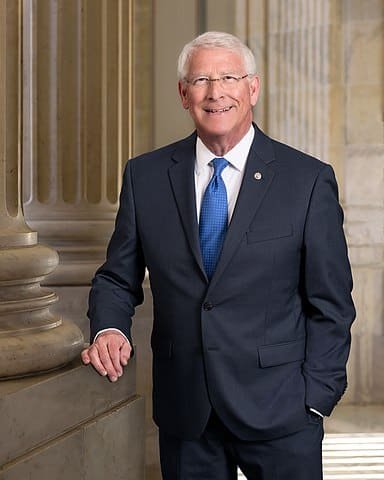
Information
Contact Information
Social Media
About
Roger F. Wicker: United States Senator Representing Mississippi
Introduction
In the often-turbulent landscape of modern American politics, few figures have maintained as steady and influential a trajectory as Roger F. Wicker. Serving as the senior United States Senator from Mississippi, Wicker has cultivated a reputation not as a firebrand seeking the spotlight, but as a deliberate, strategic lawmaker whose fingerprints are on some of the nation’s most critical defense, infrastructure, and health policy legislation.
Ascending to the chairmanship of the powerful Senate Armed Services Committee for the 119th Congress, Wicker stands at the pinnacle of his legislative power. His career serves as a case study in the traditional path of a Southern statesman: deep local roots, military service, and a slow, methodical climb through the ranks of governance. For Mississippians, he is a familiar face who has delivered tangible economic wins, from massive broadband investments to next-generation shipbuilding contracts. For the nation, he has emerged as a leading voice on national security and human rights, shaping America’s posture toward global adversaries like Russia and China.
Early Life and Foundations: The Pontotoc Roots
To understand Roger Wicker’s political philosophy, one must look first to his origins. Born on July 5, 1951, in Pontotoc, Mississippi, Wicker was raised in an environment where civic duty and community service were paramount. He is the son of the late Circuit Judge Fred Wicker and Wordna Wicker, a lineage that instilled in him a respect for the rule of law and the institutions of governance from a young age.
Wicker’s educational path was thoroughly Mississippian. He attended the public schools of Pontotoc, graduating from Pontotoc High School in 1969. He then enrolled at the University of Mississippi (Ole Miss), an institution that has produced many of the state’s political leaders. At Ole Miss, Wicker was not just a student; he was a leader, serving as the Associated Student Body President—a role that often foreshadows future political success in the state. He earned his bachelor’s degree in journalism and political science in 1973, followed by a Juris Doctor from the University of Mississippi School of Law in 1975.
However, it was his military service that would arguably shape his worldview most profoundly. In 1976, Wicker commissioned in the United States Air Force. He served as a judge advocate (JAG) on active duty until 1980. Unlike many who leave service behind entirely upon returning to civilian life, Wicker continued to serve in the Air Force Reserve for decades, eventually retiring in 2004 with the rank of lieutenant colonel. This extensive military background provides the context for his later legislative priorities. When Wicker speaks on the floor of the Senate about military readiness, veteran care, or the strategic necessity of a robust fleet, he does so not just as a politician, but as a retired officer who understands the military hierarchy and the sacrifices of service members.
The Political Ascent: From Staffer to Senator
Roger Wicker’s entry into professional politics was not immediate. After his active duty service, he began his career behind the scenes, working as counsel to then-Representative Trent Lott on the House Rules Committee in 1980. This experience was a masterclass in legislative procedure, teaching Wicker the intricate mechanics of how a bill becomes law—knowledge that would serve him well decades later.
He returned to Mississippi to serve as a public defender and later a city judge in Tupelo, firmly embedding himself in the local legal community. His electoral career began in earnest in 1987 when he was elected to the Mississippi State Senate. During his tenure in the state legislature (1988–1994), he championed education reform and economic development, building a conservative track record that appealed to the voters of North Mississippi.
In 1994, when veteran Congressman Jamie Whitten—the longest-serving representative in House history at the time—retired, Wicker seized the opportunity. He won the election to represent Mississippi’s First Congressional District. For over a decade in the U.S. House of Representatives, Wicker focused on appropriations and public health, quietly building alliances.
His leap to the upper chamber came in 2007. When his former mentor, Senator Trent Lott, resigned, Mississippi Governor Haley Barbour appointed Wicker to fill the vacancy. It was a full-circle moment: the former staffer was now replacing the boss. Wicker subsequently won the special election in 2008 to keep the seat and has been re-elected comfortably ever since, most recently securing another term in the 2024 elections.
A Titan of Defense: Rebuilding American Power
While Wicker works on numerous issues, his legacy will likely be defined by his leadership in national defense. As the Chairman of the Senate Armed Services Committee for the 119th Congress, Wicker holds one of the most influential gavels in Washington. His philosophy is encapsulated in the Reagan-era doctrine of “Peace Through Strength”—the belief that the best way to prevent war is to be so formidable that no adversary dares to challenge the United States.
A cornerstone of Wicker’s defense policy is the expansion of the United States Navy. Recognizing the maritime nature of global trade and the rising naval capabilities of China, Wicker authored the “SHIPS Act” (Securing the Homeland by Increasing our Power on the Seas), which made it the official policy of the United States to achieve a 355-ship Navy. This was not merely an abstract number; Wicker argued that a larger fleet was essential for maintaining global stability and keeping shipping lanes open.
This policy also had significant implications for his home state. Mississippi is home to Ingalls Shipbuilding in Pascagoula, one of the primary builders of Navy destroyers and amphibious assault ships. By advocating for a larger fleet, Wicker effectively merged national security interests with local economic benefits, ensuring thousands of high-paying skilled jobs for Mississippians on the Gulf Coast. His “21st Century Peace Through Strength” plan calls for sustained defense investment to modernize the nuclear triad, improve military infrastructure, and accelerate the development of drone technology and autonomous systems.
The Helsinki Commission and Human Rights
Beyond the machinery of war, Wicker has established himself as a prominent figure in the realm of international diplomacy and human rights through his work with the Commission on Security and Cooperation in Europe, commonly known as the Helsinki Commission. Wicker has served as both Chairman and Co-Chairman of this body, which monitors human rights, military security, and economic cooperation in 57 countries.
Wicker’s leadership on the commission has often placed him in direct opposition to authoritarian regimes. He has been a vocal critic of the Russian government under Vladimir Putin, particularly regarding its aggression toward Ukraine and its internal suppression of dissent. He was instrumental in the passage of the Magnitsky Act, legislation that sanctioned Russian officials responsible for the death of lawyer Sergei Magnitsky and other human rights abuses. This work demonstrated Wicker’s willingness to use legislative tools to enforce international norms.
In 2025, upon being reappointed as Chairman of the Helsinki Commission, Wicker emphasized the urgency of the role, citing Russia’s ongoing war in Ukraine as a direct threat to the post-WWII international order. He views the commission not just as a monitoring body, but as an active participant in diplomatic strategy, working to strengthen the NATO alliance and support democratic movements in Eastern Europe and the Caucasus.
Infrastructure and the “Builder” of Mississippi
While defense and foreign policy dominate the national headlines, Wicker’s impact on Mississippi’s daily life is most visible through his work on infrastructure and economic development. He operates with the understanding that for a rural state to compete in the 21st-century economy, it requires first-class connectivity and physical infrastructure.
The Broadband Revolution
Perhaps the most transformative aspect of his recent domestic work is his focus on broadband expansion. Wicker has long argued that high-speed internet is the “electricity of the 21st century”—an essential utility rather than a luxury. He was a key negotiator of the Bipartisan Infrastructure Law, specifically fighting to ensure that accurate mapping data was used to allocate funds.32 Previously, flawed federal maps often overstated coverage in rural Mississippi, disqualifying areas from receiving aid.
Wicker’s efforts culminated in Mississippi receiving a staggering $1.2 billion through the Broadband Equity, Access, and Deployment (BEAD) program. This investment aims to close the digital divide, bringing fiber-optic connections to unserved rural communities.35 For farmers using precision agriculture, students engaging in remote learning, and patients relying on telehealth, this initiative represents a generational leap forward in quality of life.
Hard Infrastructure and Economic Growth
Wicker’s influence also extends to “hard” infrastructure: roads, bridges, ports, and water systems. Through the Water Resources Development Act (WRDA), he has secured millions of dollars for flood control projects in the Mississippi Delta and Jackson area, as well as critical water and wastewater improvements for growing municipalities like Madison and DeSoto counties.
This focus on infrastructure has created a fertile ground for private investment. Wicker frequently highlights the state’s “momentum,” pointing to major economic wins like Amazon Web Services’ (AWS) decision to invest $10 billion in two data center complexes in Madison County. This deal, the largest capital investment in Mississippi history, was facilitated by the reliable power and fiber infrastructure that Wicker has spent years championing at the federal level.
Health Care Advocate: The Personal Touch
Wicker’s legislative portfolio includes a deeply personal commitment to medical research, particularly for rare diseases. In 2001, early in his congressional career, Wicker met a constituent whose son had been diagnosed with Duchenne Muscular Dystrophy (DMD), a fatal genetic disorder. At the time, federal research into the disease was minimal, and families had little hope.
Moved by the family’s plight, Wicker authored the Muscular Dystrophy Community Assistance, Research, and Education (MD CARE) Act. The legislation was a landmark achievement, mandating that the National Institutes of Health (NIH) establish Centers of Excellence for muscular dystrophy research.43 The bill passed with broad bipartisan support and was signed into law by President George W. Bush.
The impact of the MD CARE Act has been profound. It transformed the landscape of DMD research, leading to new therapies that have extended the average lifespan of patients by over a decade. Wicker later authored updates to the law to address the needs of these patients as they reached adulthood—a problem that didn’t exist when the original bill was passed because patients rarely survived that long. He has also applied this same zeal to Alzheimer’s research, consistently voting to increase funding for the NIH to find cures for diseases that affect millions of American families.
Final Summary
Senator Roger F. Wicker represents a brand of politics that prioritizes tangible outcomes over performative rhetoric. His career is a testament to the power of seniority and committee leadership in the United States Senate. By strategically positioning himself on the Armed Services and Commerce committees, he has been able to steer the massive ship of federal bureaucracy in a direction that benefits both the national security of the United States and the economic reality of Mississippi.
From the shipyards of Pascagoula to the rural towns now receiving high-speed internet, Wicker’s legislative legacy is etched into the physical and economic landscape of his state. Simultaneously, his work on the Helsinki Commission and his hawkish stance on defense have cemented his status as a key architect of American foreign policy. As he leads the Senate Armed Services Committee in the 119th Congress, Wicker remains a quiet but formidable force, balancing the distinct roles of a global strategist and a local advocate with a steady, practiced hand.
References
Ballotpedia. (n.d.). Roger Wicker. Retrieved November 29, 2025, from https://ballotpedia.org/Roger_Wicker
Britannica, The Editors of Encyclopaedia. (2025, November 21). Roger Wicker. Encyclopedia Britannica. https://www.britannica.com/biography/Roger-Wicker
Commission on Security and Cooperation in Europe. (2025, February 12). Senator Roger Wicker appointed Chairman of the U.S. Helsinki Commission for the 119th Congress.45 https://www.csce.gov/press-releases/senator-roger-wicker-appointed-chairman-of-the-u-s-helsinki-commission-for-the-119th-congress/
Congress.gov. (n.d.). Senator Roger F. Wicker. Library of Congress. https://www.congress.gov/member/roger-wicker/W000437
Mississippi Free Press. (2023, June 28). Mississippi gets $1.2 billion for broadband expansion, but equity concerns remain. https://www.mississippifreepress.org/mississippi-gets-1-2-billion-for-broadband-expansion-but-equity-concerns-remain/
U.S. Senator Roger Wicker. (2020, February 6). Wicker introduces SHIPS Implementation Act.46 https://www.wicker.senate.gov/2020/2/wicker-introduces-ships-implementation-act
U.S. Senator Roger Wicker. (2025, September 15). Wicker recounts efforts to combat rare disease.47 https://www.wicker.senate.gov/2025/9/wicker-recounts-efforts-to-combat-rare-disease
Map
Images and Video
Voting History
| Date | Vote | Bill | Result |
|---|---|---|---|
| Mar 24, 2026 | Yea | On the Nomination PN786-9: Colin McDonald, of California, to be an Assistant Attorney General | Nomination Confirmed |
| Mar 23, 2026 | Yea | Motion to Invoke Cloture: Colin McDonald to be an Assistant Attorney General: Colin McDonald, of California, to be an Assistant Attorney General | Cloture Motion Agreed to |
| Mar 23, 2026 | Yea | On the Nomination PN858: Markwayne Mullin, of Oklahoma, to be Secretary of Homeland Security | Nomination Confirmed |
| Mar 22, 2026 | Yea | Motion to Invoke Cloture: Markwayne Mullin to be Secretary of Homeland Security: Markwayne Mullin, of Oklahoma, to be Secretary of Homeland Security | Cloture Motion Agreed to |
| Mar 21, 2026 | Nay | Motion to Invoke Cloture: Schumer Motion to Suspend the Rules re: TSA Funding | Cloture Motion Rejected |
| Mar 21, 2026 | Yea | Motion to Invoke Cloture: Tuberville Amdt. No. 4421 to the Motion to Concur in the House Amendment to S. 1383 with Amendment | Cloture Motion Rejected |
| Mar 20, 2026 | Not Voting | Upon Reconsideration, Motion to Invoke Cloture on the Motion to Proceed to H.R. 7147 | Cloture on the Motion to Proceed Rejected |
| Mar 18, 2026 | Nay | On the Motion to Discharge S.J.Res. 118 | Motion to Discharge Rejected |
| Mar 17, 2026 | Yea | Motion to Proceed on S. 1383: Safeguard American Voter Eligibility Act / SAVE America Act | Motion to Proceed Agreed to |
| Mar 17, 2026 | Yea | On the Nomination PN787-4: Anna St. John, of Louisiana, to be United States District Judge for the Eastern District of Louisiana | Nomination Confirmed |
| Mar 17, 2026 | Yea | Motion to Invoke Cloture: Anna St. John to be U.S. District Judge for the Eastern District of Louisiana: Anna St. John, of Louisiana, to be United States District Judge for the Eastern District of Louisiana | Cloture Motion Agreed to |
| Mar 12, 2026 | Yea | Motion to Invoke Cloture Re: Motion to Proceed to H.R. 7147 | Cloture Motion Rejected |
| Mar 12, 2026 | Yea | H.R. 6644: Housing for the 21st Century Act | Bill Passed |
| Mar 12, 2026 | Yea | H.R. 6644: 21st Century ROAD to Housing Act | Bill Passed |
| Mar 11, 2026 | Nay | Motion to Invoke Cloture: H.R. 6644 as amended | Cloture Motion Agreed to |
| Mar 11, 2026 | Nay | S.Amdt. 4308 (Scott) to H.R. 6644: In the nature of a substitute. | Amendment Agreed to |
| Mar 10, 2026 | Yea | Motion to Invoke Cloture Re: Amdt. No. 4308 | Cloture Motion Agreed to |
| Mar 10, 2026 | Yea | On the Nomination PN711: Lt. Gen. Joshua M. Rudd, in the Army, to be General | Nomination Confirmed |
| Mar 9, 2026 | Yea | Motion to Invoke Cloture: Lt. Gen. Joshua M. Ruud to be General in the United States Army: Lt. Gen. Joshua M. Rudd, in the Army, to be General | Cloture Motion Agreed to |
| Mar 9, 2026 | Yea | Motion to Invoke Cloture: Lt. Gen. Joshua M. Rudd to be General in the United States Army: Lt. Gen. Joshua M. Rudd, in the Army, to be General | Cloture Motion Agreed to |
| Mar 5, 2026 | Yea | Upon Reconsideration, Motion to Invoke Cloture: Motion to Proceed to H.R. 7147 | Cloture on the Motion to Proceed Rejected |
| Mar 4, 2026 | Nay | On the Motion to Discharge S.J.Res. 104 | Motion to Discharge Rejected |
| Mar 4, 2026 | Yea | Motion to Proceed on H.R. 6644: Housing for the 21st Century Act | Motion to Proceed Agreed to |
| Mar 2, 2026 | Yea | Motion to Invoke Cloture: Motion to Proceed to H.R. 6644 | Cloture on the Motion to Proceed Agreed to |
| Feb 26, 2026 | Yea | On the Nomination PN730-46: Ryan McCormack, of Virginia, to be Under Secretary of Transportation for Policy | Nomination Confirmed |
| Feb 26, 2026 | Yea | Motion to Invoke Cloture: Ryan McCormack to be Under Secretary of Transportation for Policy: Ryan McCormack, of Virginia, to be Under Secretary of Transportation for Policy | Cloture Motion Agreed to |
| Feb 25, 2026 | Not Voting | On the Nomination PN730-19: John DeLeeuw, of Texas, to be a Member of the National Transportation Safety Board for the remainder of the term expiring December 31, 2026 | Nomination Confirmed |
| Feb 25, 2026 | Not Voting | Motion to Invoke Cloture: John DeLeeuw to be a Member of the National Transportation Safety Board: John DeLeeuw, of Texas, to be a Member of the National Transportation Safety Board for the remainder of the term expiring December 31, 2026 | Cloture Motion Agreed to |
| Feb 24, 2026 | Yea | Motion to Invoke Cloture: Motion to Proceed to H.R. 7147 | Cloture on the Motion to Proceed Rejected |
| Feb 12, 2026 | Yea | Motion to Invoke Cloture: Motion to Proceed to H.R. 7147 | Cloture Motion Rejected |
| Feb 12, 2026 | Yea | H.J.Res. 142: Disapproving the action of the District of Columbia Council in approving the D.C. Income and Franchise Tax Conformity and Revision Temporary Amendment Act of 2025. | Joint Resolution Passed |
| Feb 11, 2026 | Yea | Motion to Proceed on H.J.Res. 142: Disapproving the action of the District of Columbia Council in approving the D.C. Income and Franchise Tax Conformity and Revision Temporary Amendment Act of 2025. | Motion to Proceed Agreed to |
| Feb 10, 2026 | Nay | Motion to Proceed on S.J.Res. 95: A joint resolution providing for congressional disapproval under chapter 8 of title 5, United States Code, of the rule submitted by the Internal Revenue Service relating to “Interim Guidance Simplifying Application of the Corporate Alternati | Motion to Proceed Rejected |
| Feb 10, 2026 | Yea | On the Nomination PN726-4: Daniel E. Burrows, of Colorado, to be an Assistant Attorney General | Nomination Confirmed |
| Feb 9, 2026 | Yea | Motion to Invoke Cloture: Daniel E. Burrows to be an Assistant Attorney General: Daniel E. Burrows, of Colorado, to be an Assistant Attorney General | Cloture Motion Agreed to |
| Feb 5, 2026 | Yea | On the Nomination PN726-11: Justin R. Olson, of Indiana, to be United States District Judge for the Southern District of Indiana | Nomination Confirmed |
| Feb 5, 2026 | Yea | Motion to Invoke Cloture: Justin R. Olson to be U.S. District Judge for the Southern District of Indiana: Justin R. Olson, of Indiana, to be United States District Judge for the Southern District of Indiana | Cloture Motion Agreed to |
| Feb 5, 2026 | Yea | On the Nomination PN726-9: Brian Charles Lea, of Tennessee, to be United States District Judge for the Western District of Tennessee | Nomination Confirmed |
| Feb 4, 2026 | Yea | Motion to Invoke Cloture: Brian Charles Lea to be U.S. District Judge for the Western District of Tennessee: Brian Charles Lea, of Tennessee, to be United States District Judge for the Western District of Tennessee | Cloture Motion Agreed to |
| Feb 4, 2026 | Yea | On the Nomination PN726-2: Megan Blair Benton, of Missouri, to be United States District Judge for the Western District of Missouri | Nomination Confirmed |
| Feb 4, 2026 | Yea | Motion to Invoke Cloture: Megan Blair Benton to be U.S. District Judge for the Western District of Missouri: Megan Blair Benton, of Missouri, to be United States District Judge for the Western District of Missouri | Cloture Motion Agreed to |
| Feb 4, 2026 | Yea | On the Nomination PN726-12: Aaron Christian Peterson, of Alaska, to be United States District Judge for the District of Alaska | Nomination Confirmed |
| Feb 3, 2026 | Yea | Motion to Invoke Cloture: Aaron Christian Peterson to be U.S. District Judge for the District of Alaska: Aaron Christian Peterson, of Alaska, to be United States District Judge for the District of Alaska | Cloture Motion Agreed to |
| Feb 3, 2026 | Yea | On the Nomination PN726-6: Nicholas Jon Ganjei, of Texas, to be United States District Judge for the Southern District of Texas | Nomination Confirmed |
| Feb 3, 2026 | Yea | Motion to Invoke Cloture: Nicholas Jon Ganjei to be U.S. District Judge for the Southern District of Texas: Nicholas Jon Ganjei, of Texas, to be United States District Judge for the Southern District of Texas | Cloture Motion Agreed to |
| Feb 3, 2026 | Yea | On the Nomination PN726-5: David Clay Fowlkes, of Arkansas, to be United States District Judge for the Western District of Arkansas | Nomination Confirmed |
| Feb 2, 2026 | Yea | Motion to Invoke Cloture: David Clay Fowlkes to be United States District Judge for the Western District of Arkansas: David Clay Fowlkes, of Arkansas, to be United States District Judge for the Western District of Arkansas | Cloture Motion Agreed to |
| Jan 30, 2026 | Yea | H.R. 7148: Consolidated Appropriations Act, 2026 | Bill Passed |
| Jan 30, 2026 | Nay | On the Motion (Motion to Waive All Applicable Budgetary Discipline Re: Merkley Amdt. No. 4287) | Motion Rejected |
| Jan 30, 2026 | Nay | S.Amdt. 4290 (Sanders) to H.R. 7148: To rescind certain amounts appropriated for U.S. Immigration and Customs Enforcement and certain changes to Medicaid. | Amendment Rejected |