

- This event has passed.
“Smartphone Democracy” (Francois Brochet) book discussion
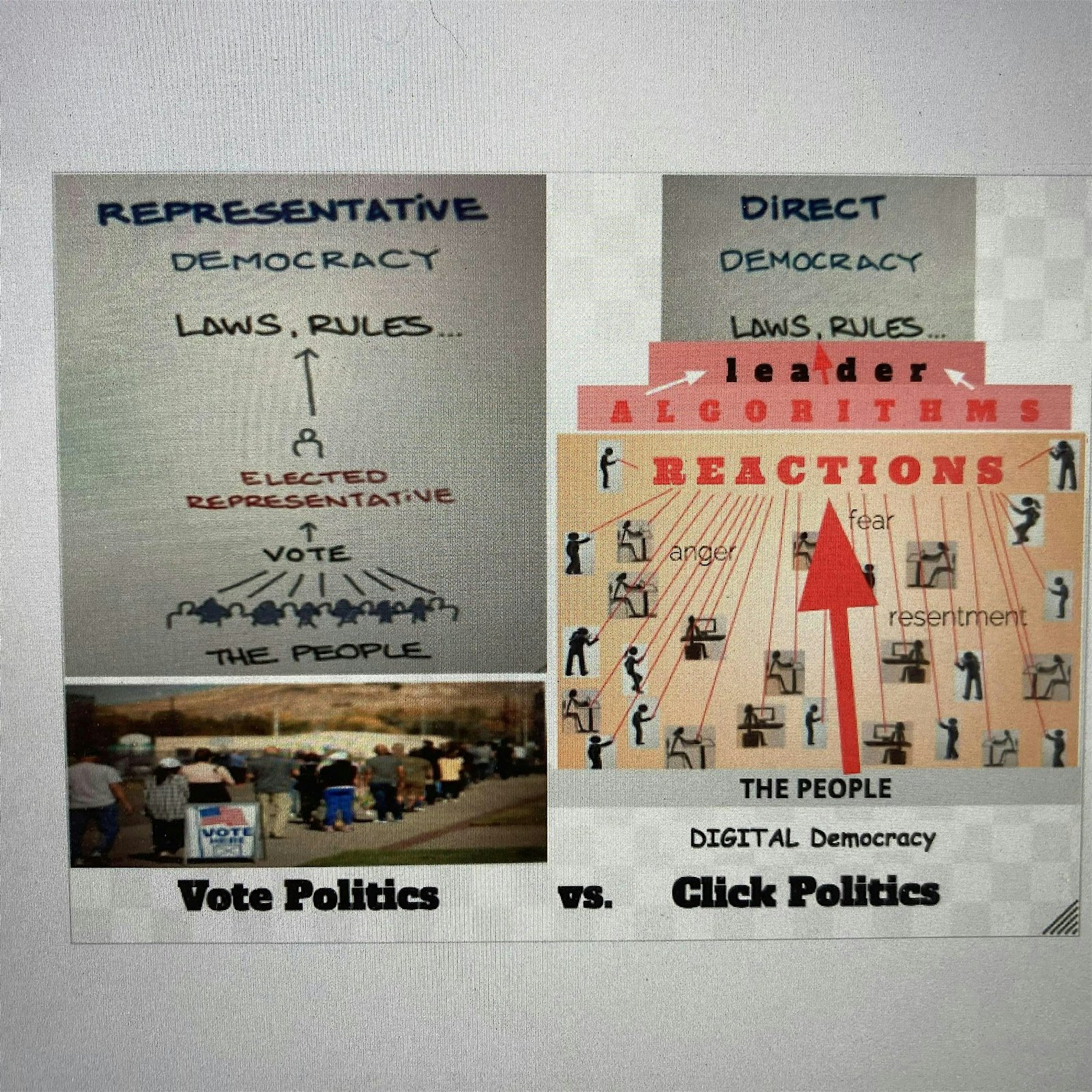
If you have noticed that smartphones have radically changed our social activity over the last two decades, do you think that smartphones have radically changed our political activity as well? Francois Brochet does. In Smartphone Democracy, he carefully deconstructs patterns of smartphone use as well as their effects on political systems. He concludes that no matter how hard we try, 21st-century political processes cannot be replaced by the previous 20th-century norms that were used to generate the familiar patterns of our representative democracies.
We have slowly developed new habits that derive from our quick reactions to smartphones. Over a couple of decades, these habits have made voting on a yearly (or four-year basis) too slow for the multitudes. The result is a political change seen in the phenomenal growth of global populist movements often characterized by millions of internet users liking, sharing, tweeting, “truthing”, re-tweeting, or “re-truthing” their preferences. And all of this informational sharing is under the control of a charismatic leader whose data analysts help shape decisions made by governments.
The iphones and social platforms that were invented in the early 2000’s quickly spread throughout the world. There are currently 7.4b smartphones in use and 5.4b social media users worldwide. Beginning in 2007, Barack Obama and his knowledgeable tech team first used only texting to collect 2.2m volunteers who then interacted with 10 million voters. This resulted in his gaining 3 million donors and a vast majority of support among both 18-30 year-old voters and Black/Hispanic voters which led to his victory in the 2008 presidential election. His “Yes We Can” slogan was picked up in Spain by the Podermos (meaning “We Can”) movement in 2014 and by the end of 2015 that left-wing populist movement won 20.7% of the Spanish votes cast (5.1m) using digital techniques.
Since 2002, populist politics have been developing and spreading through many countries. In Italy and Hungary, the voting for the populist leaders is currently larger than the voting for the traditional parties’ leaders (58% and 54% in 2022).
In the United States, populism is usually thought of as a right-wing phenomena (based on the use of social media platforms by the Republican party), but on November 5th Zohran Mamdani’s left-wing populism made him the new mayor of New York (a city with more economic power than Canada). He gathered 104,000 volunteers who made 4.4m phone calls and knocked on 3.1m doors which led him to obtain just over 1m votes and win the election. A few days later, he used Blue Sky Social to collect 50,000 resumes so that he could hire people for his upcoming mayoral administration.
Additionally, California Governor Gavin Newsom began to use left-wing populism based on social platforms last summer. At first he just imitated the Trump tweet-clash style using all capital letters, but since then his Press Office team has been maintaining a constant presence on Twitter/X and he has now become the leading contender for the 2026 elections.
The “smartphone democracy” methods that Brochet describes have become standardized wherever they are used and are fairly easy to understand. They are best summarized in another book (The Engineers of Chaos: How the engineers of chaos multiply anger and frustration using their algorithms by Da Empoli, 2025) which offers a quick and somewhat blunt analysis:
“A process of microtargeting is used to mine anger and resentment about certain political topics which then get channeled into political energy.
Emotional content is prioritized over rational discourse on the platforms which then amplify polarization and replace traditional political debate with strong emotions like anger, fear, and resentment (often about hot topics like immigration).
The logic of the political actions which become catalyzed by the platforms involves three simple operations:
1) identify both hot topics and fractures that divide public opinion,
2) push the most extreme positions and make them clash with each other, and
3) project this confrontation back onto the public as a whole.
These three operations then generate anger and frustration which overheat the general atmosphere.”
This book discussion will offer a 25-minute presentation about the ideas in Smartphone Democracy with questions and comments invited. The remaining time will be devoted to breakout groups and a general discussion. Join us for an engaging experience.

For more Political Events please visit the Political Jar events calendar.